Birman vs Ragdoll
Both breeds side by side, to help you choose based on your lifestyle.
Last reviewed: October 7, 2026
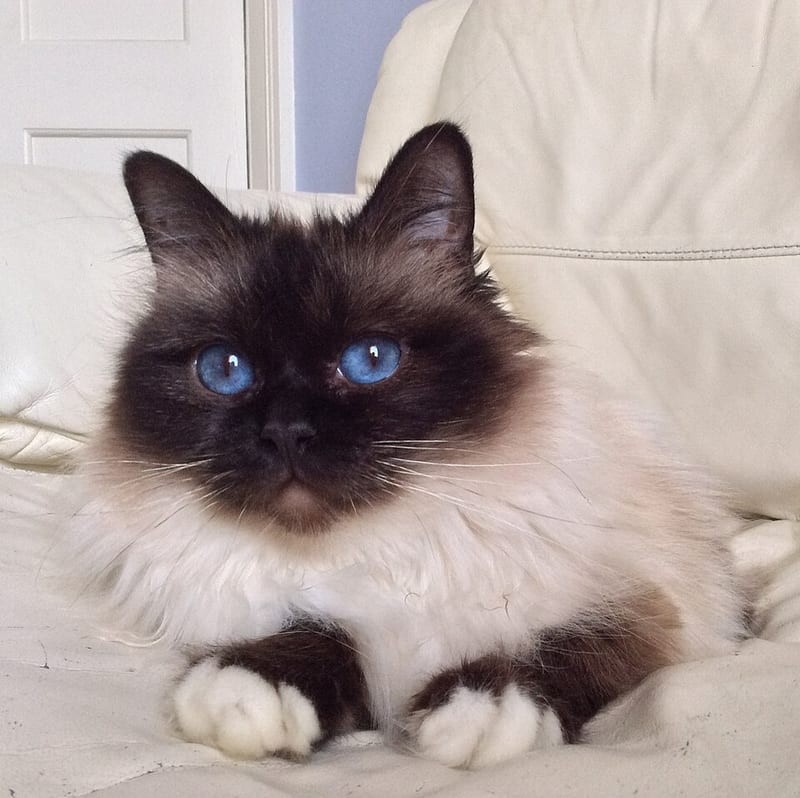
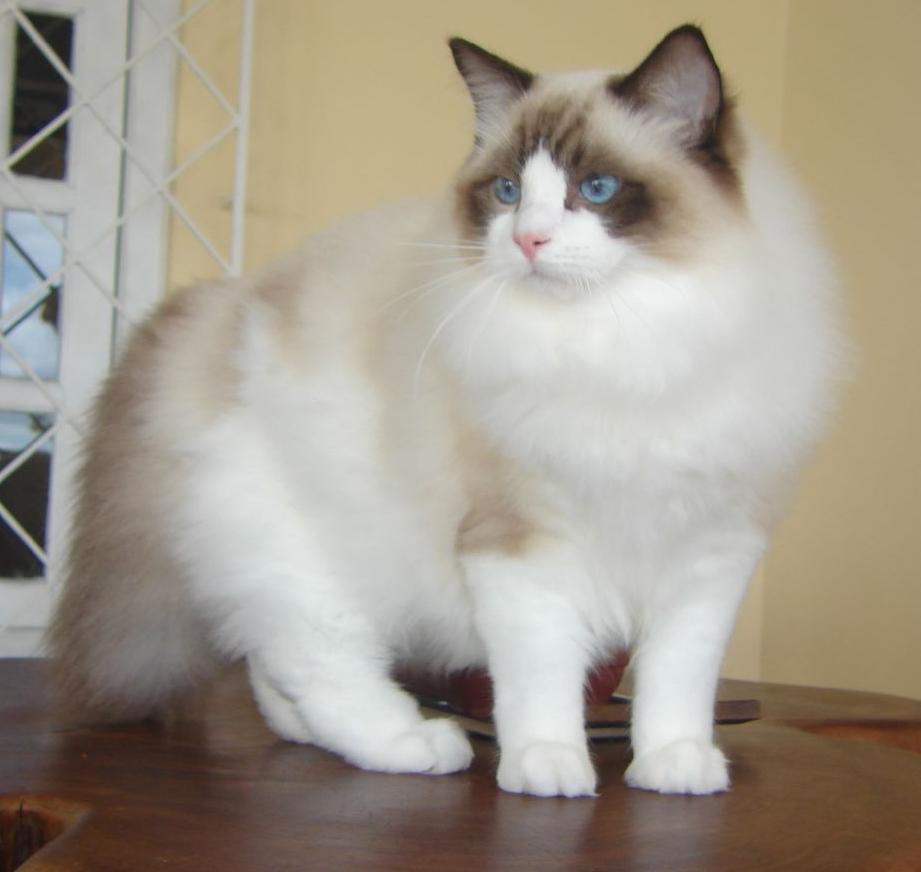
Key differences
- Birman tends to be more vocal than Ragdoll (slight difference).
What the standards and studies say
Two semi-longhaired, blue-eyed cats. FIFe places both breeds in the same category (Category 1, semi-longhair). The Sacred Birman has been recognised since 1949, the Ragdoll since 1991.
Build. The FIFe standard describes the Birman as medium-sized, with a slightly long body and short, strong legs, males more massive than females. The Ragdoll is described as a firm, large, muscular cat with medium to strong bone and heavier hindquarters. Neither standard gives a weight.
White gloves or three patterns. The Birman’s hallmark is its four white feet, the “gloves”, which must be pure white and symmetrical. The Ragdoll comes in three patterns: colourpoint, mitted and bicolour.
Coat. The Birman’s coat is long to semi-long depending on the area, silky, with little undercoat. The Ragdoll’s is medium long, dense, soft and silky, feeling “like cold silk” according to the standard, longest around the neck.
Breed-specific health. In Ragdolls, the MYBPC3 R820W mutation is associated with hypertrophic cardiomyopathy: in a survey of 236 genotyped Ragdolls, median survival of cats with two copies was 5.65 years, against more than 15 years for the others (Borgeat et al., 2014). In Birmans, a FOXN1 deletion causes, with two copies, a syndrome of hairlessness at birth and short life expectancy; 3.2% of Birmans tested in France were healthy carriers (Abitbol et al., 2015). DNA tests exist for both mutations.
Worth knowing for Birman blood tests. In 50 healthy Birmans, blood creatinine was higher than in cats of other breeds, and above the usual threshold in 40% of them (Paltrinieri et al., 2018). This can matter when a blood test is interpreted: mention it to your vet.
Sources
- FIFe, Sacred Birman (SBI) standard, 01.01.2026
- FIFe, Ragdoll (RAG) standard, 01.01.2026
- Borgeat K. et al. (2014), Journal of Veterinary Cardiology, MYBPC3 R820W and cardiac death in 236 Ragdoll cats
- Abitbol M. et al. (2015), PLoS One, FOXN1 deletion, congenital hypotrichosis and short life expectancy in Birman cats
- Paltrinieri S. et al. (2018), Journal of Feline Medicine and Surgery, SDMA and creatinine in Birman cats
Detailed comparison
| Criterion | Birman | Ragdoll |
|---|---|---|
| Origin | Burma (legend); developed in France | California, United States |
| Size | Medium | Large |
| Adult weight | not stated | not stated |
| Life expectancy | not stated | not stated |
| Temperament | Gentle, Affectionate, Quiet | Docile, Affectionate, Calm |
| Energy | ||
| Exercise needs | ||
| Grooming | ||
| Shedding | ||
| Family-friendly | ||
| With other pets | ||
| Apartment-friendly | ||
| Trainability | ||
| Copes with time alone | ||
| Vocal |
Weight and life expectancy are typical ranges; individuals vary. 1–5 profiles are PawShorts editorial estimates, not measurements.