Cat · Named after Abyssinia (Ethiopia); developed in the UK
Abyssinian cat
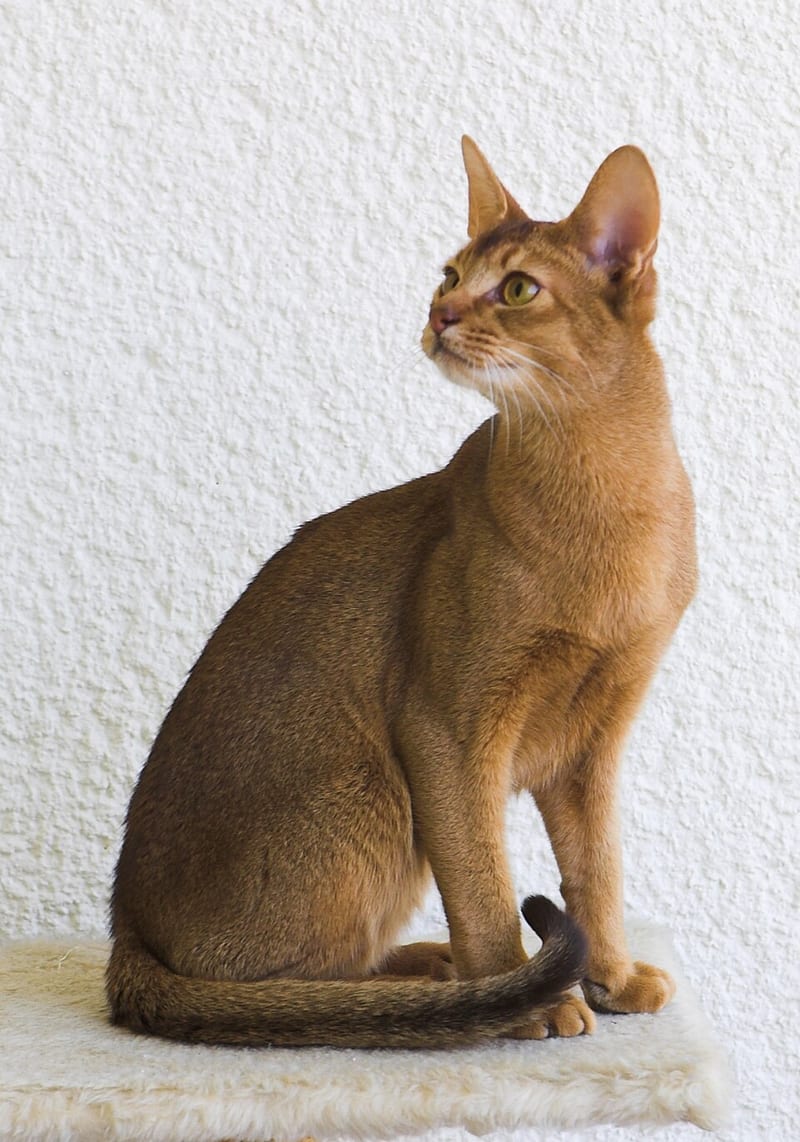
Abyssinians are slender, athletic cats with a warm “ticked” coat in which each hair has several bands of colour. They are curious, active and love to climb.
- Curious
- Active
- Playful
Last reviewed: October 7, 2026
Key facts
| Origin | Named after Abyssinia (Ethiopia); developed in the UK |
|---|---|
| Size | Medium |
| Size (FIFe standard) | Medium, lithe and muscular |
| Recognised colours (FIFe) | Ruddy, blue, sorrel, fawn, and their silver versions |
Typical ranges; individuals vary.
Care and needs
Minimal grooming. Needs climbing space, puzzle feeders and daily active play.
Good to know
Rarely a lap cat; easily bored without stimulation.
This is general information. For your own animal’s health, ask a vet.
At a glance
- Energy
- Exercise needs
- Grooming
- Shedding
- Family-friendly
- With other pets
- Apartment-friendly
- Trainability
- Copes with time alone
- Vocal
PawShorts editorial estimates (1–5), not measurements. Use them to compare breeds with each other.
What the standard says: ticked coat, colours and size
FIFe recognised the Abyssinian in 1949, and its semi-longhaired version, the Somali, in 1981. The standard (version of 1 January 2026) describes a medium-sized, lithe and muscular cat with fine, long legs and small oval paws. The head is a medium wedge with soft contours. The ears are relatively large and broad at the base, and tufts at the tips are desirable. The large almond eyes are amber, green or yellow, outlined with the ticking colour.
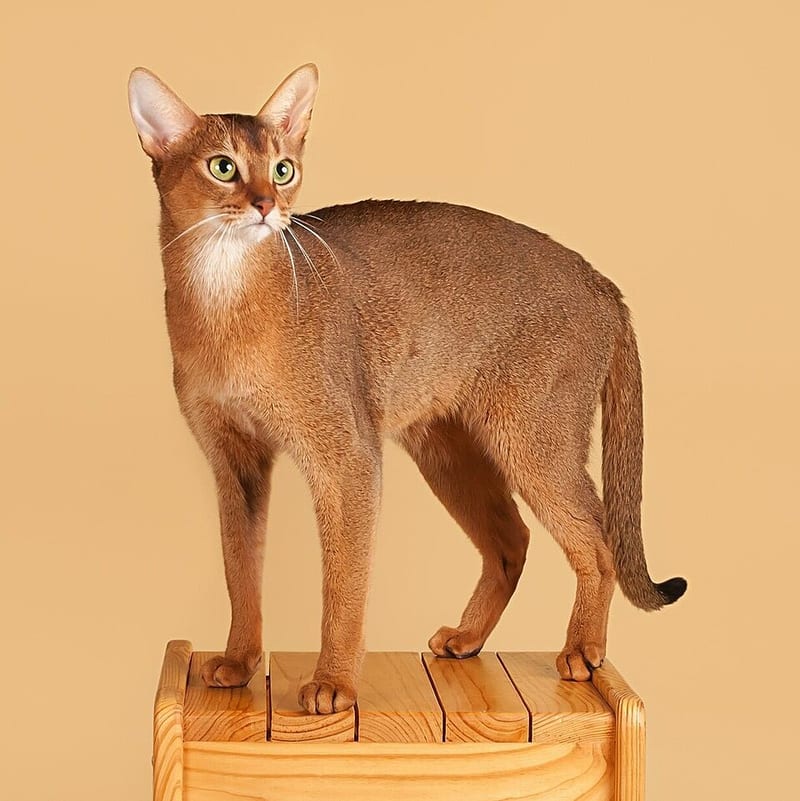
Its hallmark is the “ticked” coat: each short, fine, close-lying hair carries two or three bands of colour, ideally with a dark tip. The underside must be plain, without bars or unbroken necklaces, with darker shading along the spine and a solid dark tail tip without rings. White is allowed only around the lips, nostrils and chin.
FIFe recognises four colours (ruddy, blue, sorrel and fawn) and their silver versions. The standard gives no weight.
How much does an Abyssinian weigh?
In a German study of pedigree cats weighed at ideal body condition, the 9 Abyssinian females averaged 2.8 kg, placing them among the “very light” breeds. The 5 males averaged 4.1 kg, too few for the authors to classify (Kienzle & Moik, 2011). These figures rest on few cats: they give an order of magnitude, not a norm.
Health: inherited diseases described in the breed
Eyes. A late-onset progressive retinal atrophy (rdAc), leading to blindness, is caused by a recessive mutation in the CEP290 gene identified in the Abyssinian (Menotti-Raymond et al., 2007). Depending on the country, 7% to 21% of gene copies carried the mutation in the Abyssinians and Somalis studied (Menotti-Raymond et al., 2010). A DNA test can identify carriers.
Blood. Pyruvate kinase deficiency is an inherited recessive anaemia (PKLR gene). In a Japanese study, 13 of 35 Abyssinians tested were carriers (Kushida et al., 2015). Many affected cats show few visible signs: of 25 affected Abyssinians and Somalis, 11 had no signs noticed by their owners (Kohn & Fumi, 2008). Abnormally fragile red blood cells, another cause of anaemia, have also been described in the breed (Kohn et al., 2000).
Kidneys. Familial renal amyloidosis, protein deposits that damage the kidneys, has been described in related Abyssinians (DiBartola et al., 1986). Its mode of inheritance is not established and it is often diagnosed only after death (Paltrinieri et al., 2015).
Life expectancy. We found no reliable figure: the main UK study of cat life expectancy (Teng et al., 2024) does not include the Abyssinian.
Drawbacks to know before you commit
Curious and playful, the Abyssinian does not suit every home:
- Rarely a lap cat: it needs climbing space and active play every day.
- It gets bored quickly without stimulation.
- Several inherited diseases described in the breed, some of which can be screened by DNA test.
Before buying or adopting an Abyssinian
In France, only a cat registered with the LOOF can be sold as a pedigree cat (Rural Code, article L214-8). We do not give prices, for lack of a reliable, current source. Here is what to ask:
- The parents’ DNA test results for retinal atrophy (rdAc) and pyruvate kinase deficiency.
- The known health history of the line, especially the kidneys.
- The pedigree, the vet certificate and the kitten’s identification. Consider shelters too.
This is general information. For your own animal’s health, ask a vet.
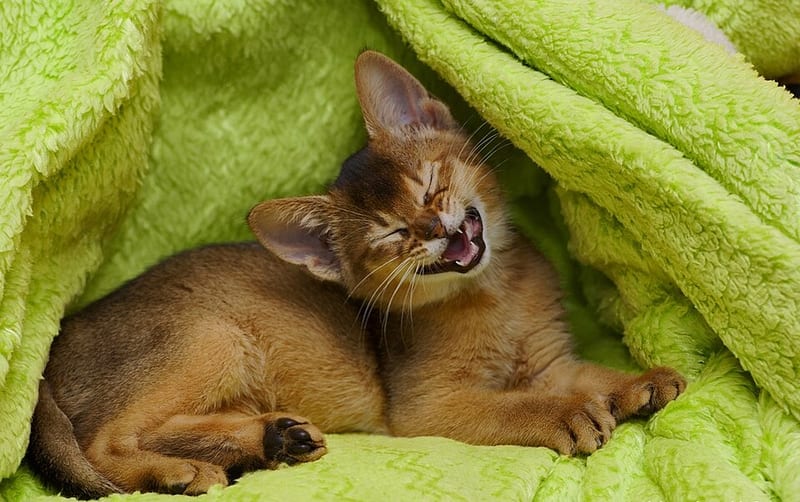
Abyssinian photos
Next steps
Frequently asked questions
Is a Abyssinian good for an apartment?
It can work with planning: apartment fit is moderate and exercise needs are high.
Can a Abyssinian be left alone?
This needs planning: we rate its tolerance of time alone as low. Arrange walkers, sitters or company if you are out for long periods.
What colours do Abyssinian cats come in?
FIFe recognises ruddy, blue, sorrel and fawn, plus their silver versions. Each hair is ticked with two or three bands of colour.
How much does an Abyssinian weigh?
The standard gives no weight. In a study of cats at ideal body condition, 9 females averaged 2.8 kg and 5 males 4.1 kg (Kienzle & Moik, 2011).
Do Abyssinians have inherited health problems?
Several have been described: progressive retinal atrophy (rdAc), pyruvate kinase deficiency, fragile red blood cells and renal amyloidosis. The first two can be screened by DNA test.
What is the difference between an Abyssinian and a Somali?
The Somali is the semi-longhaired version of the Abyssinian. FIFe describes both in the same standard.
Similar breeds
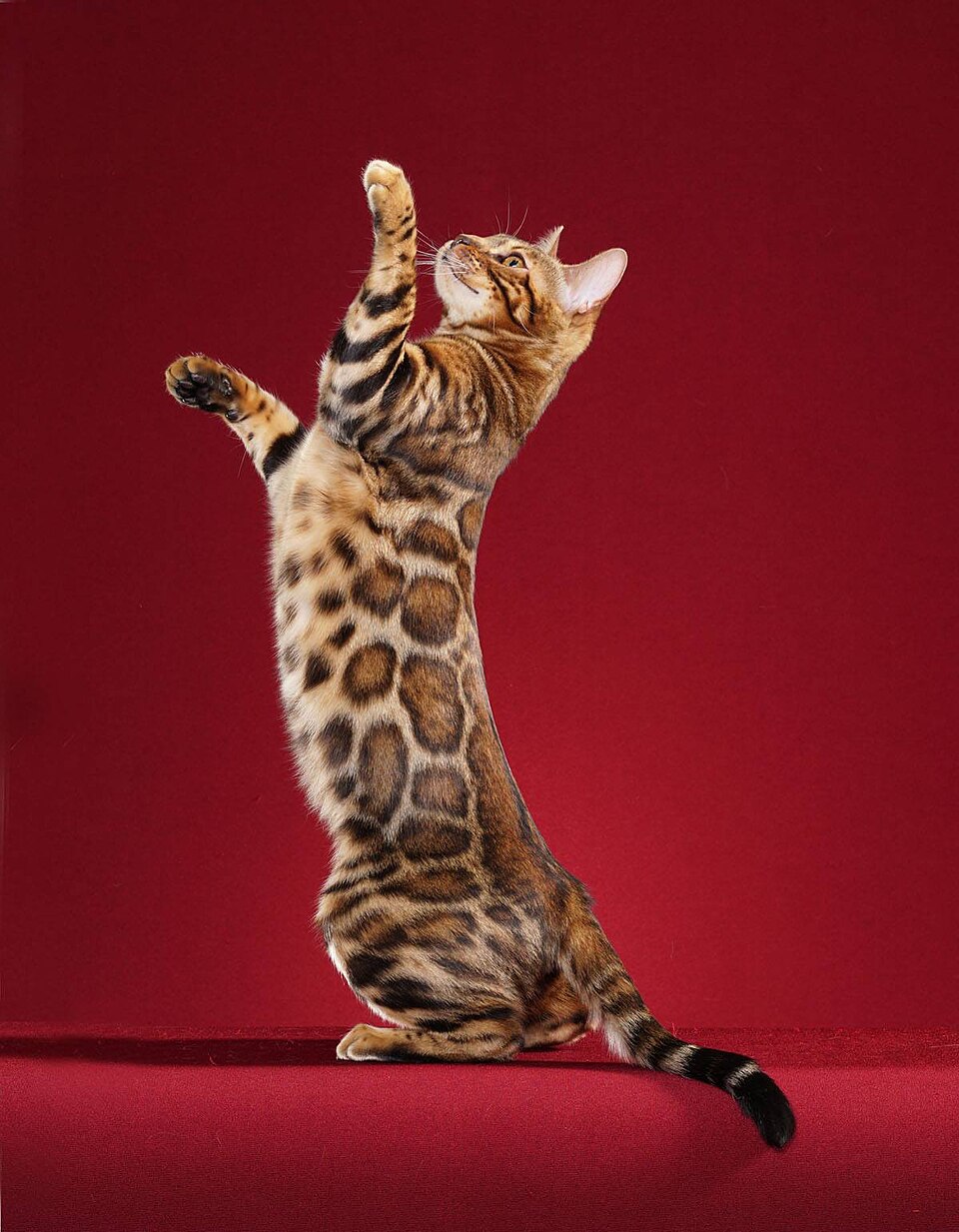
Bengal
Athletic · Curious · Energetic
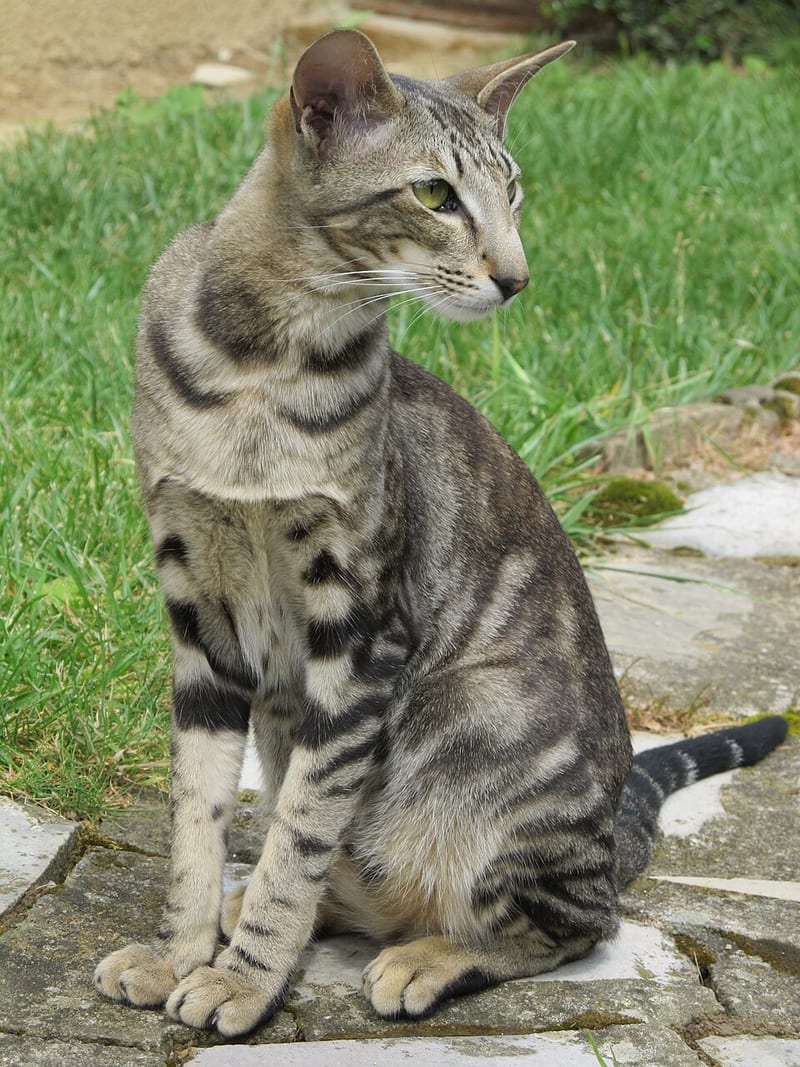
Oriental Shorthair
Talkative · Social · Clever
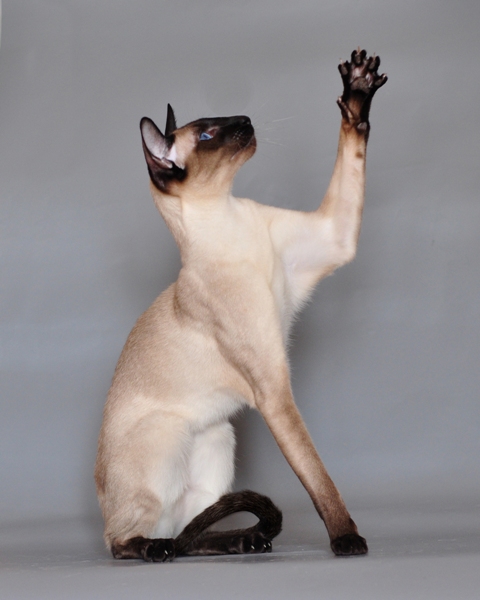
Siamese
Vocal · Social · Clever
Sources and review
- Breed reference: Cat Fanciers’ Association, Abyssinian breed page
- Wikidata entry: Q7955
- FIFe, Abyssinian/Somali (ABY/SOM) breed standard, version 01.01.2026
- Kienzle E., Moik K. (2011), British Journal of Nutrition 106(S1), body weight of pure-bred adult cats
- Menotti-Raymond M. et al. (2007), Journal of Heredity, CEP290 mutation and rdAc retinal degeneration
- Menotti-Raymond M. et al. (2010), The Veterinary Journal, rdAc mutation across cat breeds
- Kushida K. et al. (2015), Journal of Veterinary Medical Science, PK deficiency mutation in Japanese cats
- Kohn B., Fumi C. (2008), Journal of Feline Medicine and Surgery, PK deficiency in Abyssinian and Somali cats
- Kohn B. et al. (2000), JAVMA, erythrocyte osmotic fragility in Abyssinian and Somali cats
- DiBartola S.P. et al. (1986), American Journal of Veterinary Research, familial renal amyloidosis in Abyssinian cats
- Paltrinieri S. et al. (2015), Journal of Veterinary Internal Medicine, AA amyloidosis in Abyssinian cats
- LOOF, Livre officiel des origines félines
- In-depth content updated: November 18, 2026
- Last reviewed: October 7, 2026