Cat · Maine, United States
Maine Coon
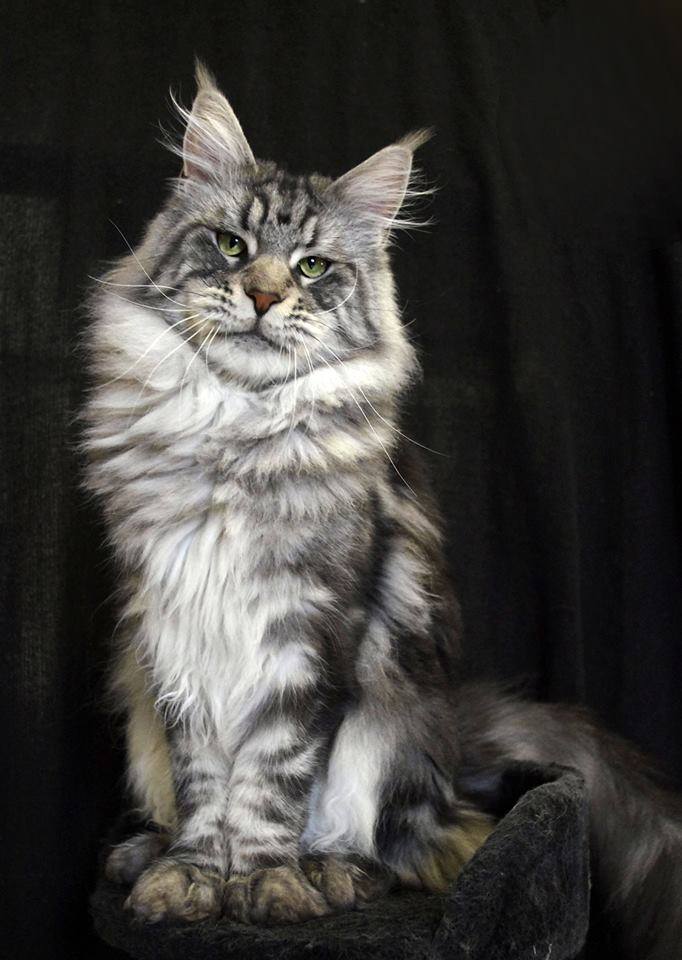
Maine Coons are large, long-haired cats from the state of Maine in the United States. They are known for tufted ears, a bushy tail and a sociable, dog-like personality.
- Gentle giant
- Sociable
- Playful
Last reviewed: October 7, 2026
Key facts
| Origin | Maine, United States |
|---|---|
| Size | Large |
| Ideal weight measured (giant breed group) | Males 6.1 kg, females 4.9 kg on average |
| Coat | Semi-long, dense, with undercoat |
| Life expectancy at birth (UK study) | 9.7 years on average (see Health) |
Typical ranges; individuals vary.
Care and needs
Brush a few times a week. Provide large, sturdy scratching posts and litter boxes.
Good to know
Slow to mature: many reach full size only after several years.
This is general information. For your own animal’s health, ask a vet.
At a glance
- Energy
- Exercise needs
- Grooming
- Shedding
- Family-friendly
- With other pets
- Apartment-friendly
- Trainability
- Copes with time alone
- Vocal
PawShorts editorial estimates (1–5), not measurements. Use them to compare breeds with each other.
How big is a Maine Coon? Size and weight of males and females
The FIFe standard (version of 1 January 2026) classes the Maine Coon as a large cat: solid bone structure, long rectangular body, hard muscled and broad-chested. It notes that adult males have a very strong neck and may have larger, broader heads than females. Like other cat standards, it sets no weight or measurement figures.
For figures, you need cats that were actually weighed. In a study of 614 cats weighed at shows or vet clinics, keeping only those at ideal body condition (score 5 out of 9), the Maine Coon was one of the “giant” breeds. That group’s average weight was 6.1 kg for males and 4.9 kg for females (Kienzle & Moik, 2011). These are group averages, not limits: some cats weigh more, and a heavier cat is not necessarily overweight, or healthy. Your vet can assess its ideal weight.
Ears, tail, coat and colours: what the standard says
According to FIFe, the Maine Coon is a natural breed descended from the farm cats of the north-eastern United States, recognised by the federation in 1982. Its ears are large and wide at the base, and lynx tufts are desirable. The tail must be at least as long as the body from shoulder blade to tail base, with long, flowing hair.
The coat is an “all weather coat”: short on the head, shoulders and legs, longer on the back and sides, with full britches, a desirable ruff and a soft undercoat whose density varies with the seasons.
Almost all colours are allowed, with any amount of white, except pointed patterns and chocolate, lilac, cinnamon and fawn. Blue eyes are allowed only in white cats or cats with a lot of white.
Health: what the studies show
Heart. A variant of the MYBPC3 gene (A31P) is linked to hypertrophic cardiomyopathy (HCM) in Maine Coons. Of 2,744 Maine Coons tested in Europe, 41.5% carried it. Among 164 of them screened by echocardiography (mean age 2.6 years), 12 had HCM, and carrying the variant raised the risk about tenfold. Some non-carriers were affected too (Mary et al., 2010), so a negative DNA test does not replace a heart scan. In another study, Maine Coons with HCM were older and more often overweight (Freeman et al., 2013).
Hips. In the Orthopedic Foundation for Animals registry, 24.9% of 2,548 Maine Coons X-rayed had hip dysplasia, slightly more in males (27.3%) than females (23.3%) (Loder & Todhunter, 2018). This registry is not a random sample. An Austrian clinic also found a slipped femoral head (slipped capital femoral epiphysis) in 17 of 208 Maine Coons seen, almost all male, about 12 times more often than in all cats at that clinic (Borak et al., 2017).
Muscles. Spinal muscular atrophy (SMA) is an inherited recessive disease described in Maine Coons: affected kittens lose strength and muscle from about 3 to 4 months of age. It is linked to an identified genetic deletion (Fyfe et al., 2006) and can be screened with a DNA test.
Life expectancy. In a UK study of 7,936 cats that died in 2019 under veterinary care, Maine Coon life expectancy at birth was 9.71 years (95% confidence interval 8.42–11.00), against 11.74 years for cats overall. This figure rests on only 69 Maine Coons (Teng et al., 2024).
Drawbacks to know before you commit
Sociable and gentle, the Maine Coon also comes with constraints linked to its size and health:
- A heart risk (HCM) that justifies scan follow-up, and often reported hip problems.
- A large frame that needs space, a sturdy cat tree and a big litter box.
- A semi-long coat that needs regular brushing, especially when shedding (PawShorts editorial estimate).
- Excess weight, linked with HCM in one study, should be monitored with your vet.
Before buying or adopting a Maine Coon
In France, only a cat registered in a pedigree book recognised by the Ministry of Agriculture (the LOOF) can be sold as a pedigree cat (Rural Code, article L214-8). Without a LOOF pedigree, the advert must state that the cat does not belong to a breed.
We do not give prices: they vary by breeder and we have no reliable, current source. Here is what to ask:
- The parents’ DNA test results: MYBPC3 (A31P) and spinal muscular atrophy (SMA).
- The parents’ heart ultrasound results from a vet, with dates, since the DNA test is not enough.
- Any hip dysplasia X-ray screening of the parents.
- The pedigree, the vet certificate and the kitten’s identification. Consider shelters and rescues too.
This is general information. For your own animal’s health, ask a vet.
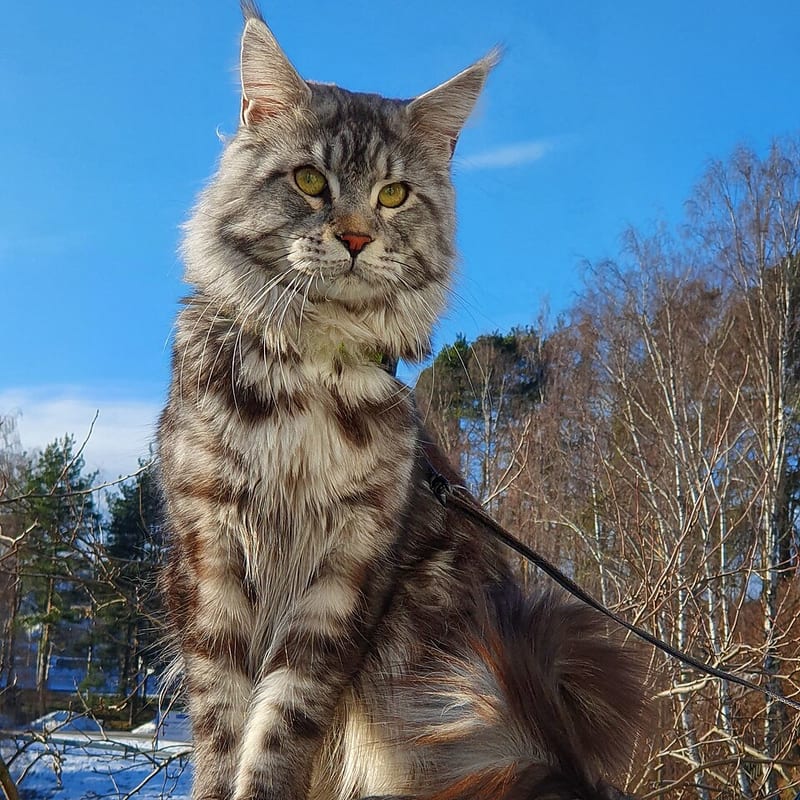
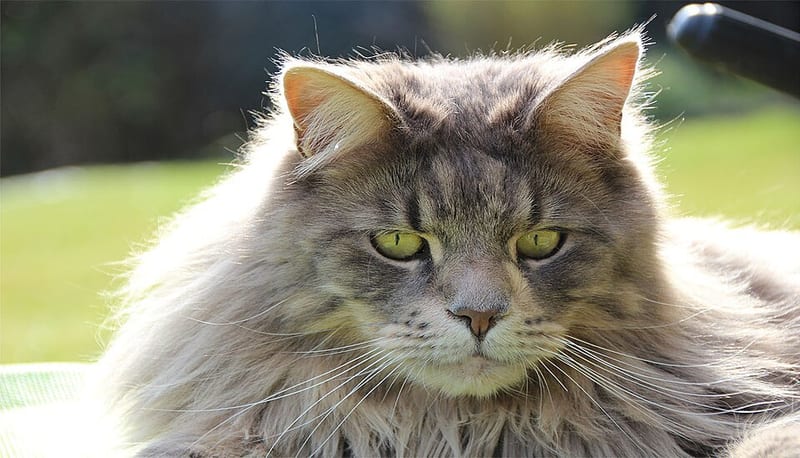
Maine Coon photos
Next steps
Frequently asked questions
Is a Maine Coon good for an apartment?
It can work with planning: apartment fit is moderate and exercise needs are moderate.
Can a Maine Coon be left alone?
This needs planning: we rate its tolerance of time alone as moderate. Arrange walkers, sitters or company if you are out for long periods.
How much does a male or female Maine Coon weigh?
The standard sets no weight. In a study of cats weighed at ideal body condition, the giant breed group, which includes the Maine Coon, averaged 6.1 kg for males and 4.9 kg for females (Kienzle & Moik, 2011). Individuals can differ.
Are female Maine Coons smaller than males?
Generally yes: in that study, females in the giant group weighed 1.2 kg less than males on average, and the FIFe standard notes that adult males have a very strong neck and may have a broader head.
Do Maine Coons have heart problems?
They are predisposed to hypertrophic cardiomyopathy. A MYBPC3 gene variant raises the risk and can be detected with a DNA test, but non-carriers can be affected too, so a heart scan is still needed.
How long do Maine Coons live?
In a large UK study (Teng et al., 2024), Maine Coon life expectancy at birth averaged 9.71 years, against 11.74 years for cats overall. This figure rests on only 69 Maine Coons and includes early deaths: many cats live longer.
Which colours are allowed in Maine Coons?
Almost all, with or without white, except pointed patterns and chocolate, lilac, cinnamon and fawn (FIFe standard).
Similar breeds
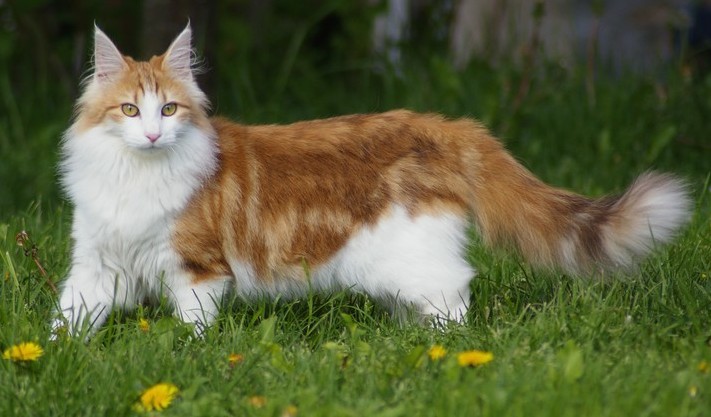
Norwegian Forest Cat
Independent · Friendly · Climber
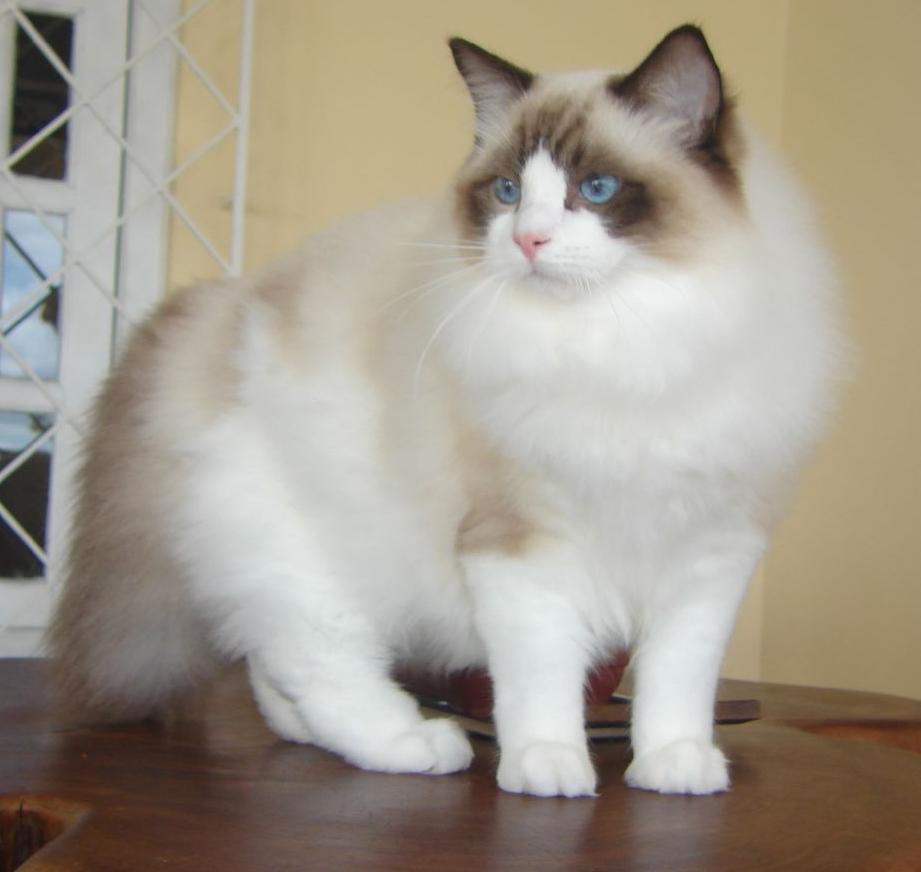
Ragdoll
Docile · Affectionate · Calm
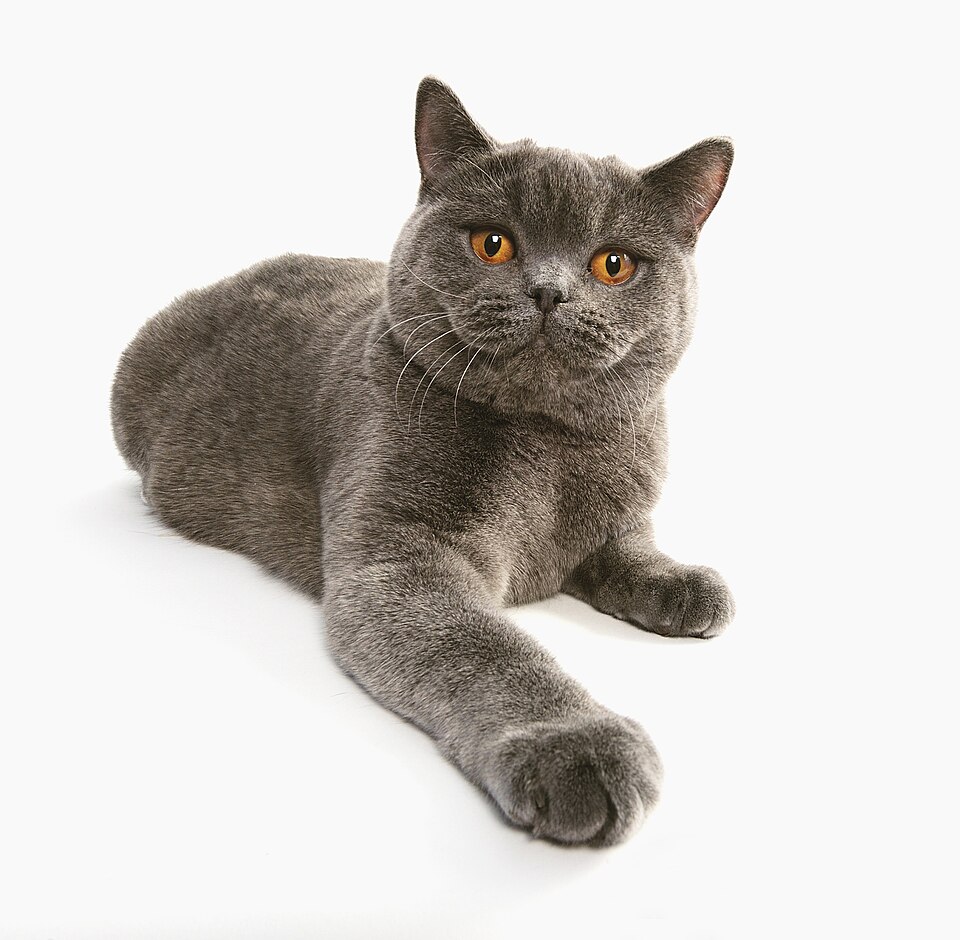
British Shorthair
Calm · Independent · Easygoing
Sources and review
- Breed reference: Cat Fanciers’ Association, Maine Coon breed page
- Wikidata entry: Q42659
- FIFe, Maine Coon (MCO) breed standard, version 01.01.2026
- Kienzle E., Moik K. (2011), British Journal of Nutrition 106(S1), body weight of pure-bred adult cats
- Mary J. et al. (2010), Journal of Veterinary Cardiology 12(3), MYBPC3-A31P and HCM in Maine Coon cats
- Freeman L.M. et al. (2013), Journal of Feline Medicine and Surgery, body size and HCM in Maine Coon cats
- Loder R.T., Todhunter R.J. (2018), Journal of Feline Medicine and Surgery, hip dysplasia in the Maine Coon
- Borak D. et al. (2017), Journal of Feline Medicine and Surgery, slipped capital femoral epiphysis in 17 Maine Coon cats
- Fyfe J.C. et al. (2006), Genome Research 16, deletion associated with feline spinal muscular atrophy
- Teng K.T. et al. (2024), Journal of Feline Medicine and Surgery 26(5), life tables of cats in the UK
- LOOF, Livre officiel des origines félines
- In-depth content updated: November 18, 2026
- Last reviewed: October 7, 2026