Cat · United Kingdom
British Shorthair cat
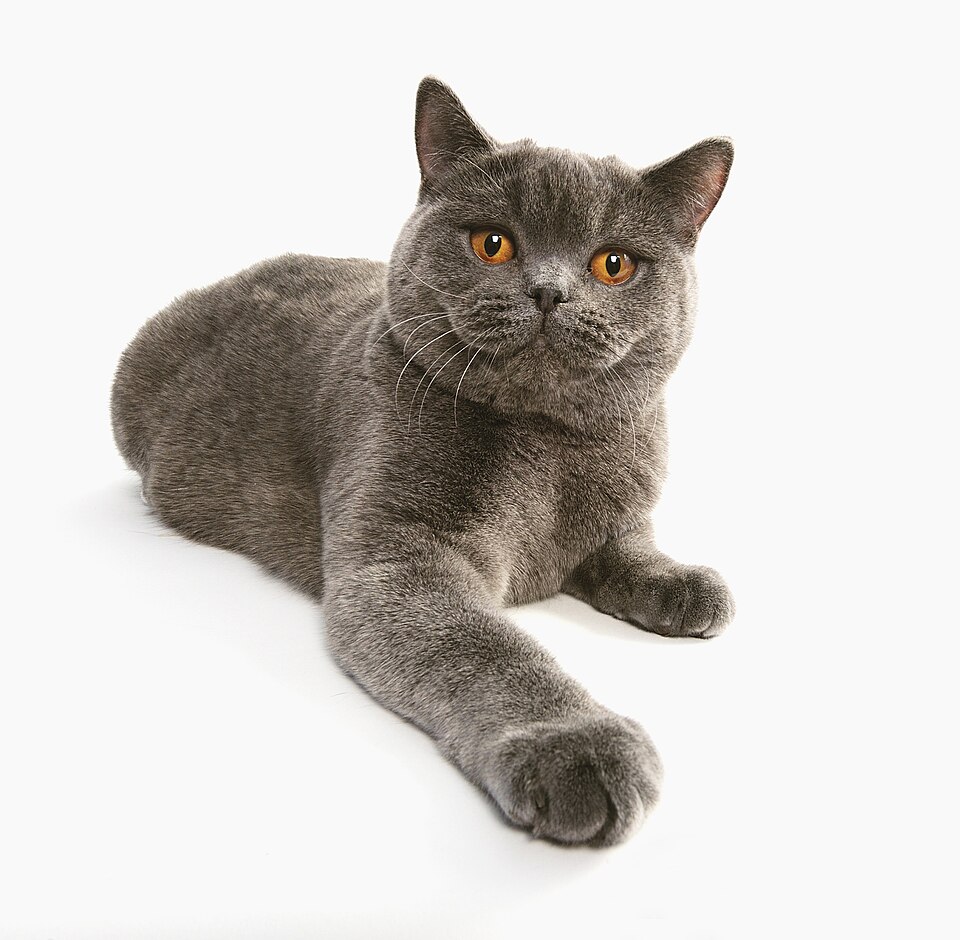
British Shorthairs are sturdy, round-faced cats with a dense plush coat, best known in blue-grey. They are calm and independent.
- Calm
- Independent
- Easygoing
Last reviewed: October 7, 2026
Key facts
| Origin | United Kingdom |
|---|---|
| Size | Medium |
| Size (FIFe standard) | Large to medium, cobby and muscular |
| Average weight at ideal condition (study) | Male 5.1 kg, female 3.6 kg (see Weight) |
| Median lifespan (UK study) | 11.8 years (see Health) |
Typical ranges; individuals vary.
Care and needs
Weekly brushing; watch food portions as many are prone to weight gain.
Good to know
Often dislikes being carried for long.
This is general information. For your own animal’s health, ask a vet.
At a glance
- Energy
- Exercise needs
- Grooming
- Shedding
- Family-friendly
- With other pets
- Apartment-friendly
- Trainability
- Copes with time alone
- Vocal
PawShorts editorial estimates (1–5), not measurements. Use them to compare breeds with each other.
What the standard says: round head and dense coat
The FIFe British standard (version of 1 July 2026) describes a large to medium cat with a cobby, muscular body, broad chest, short strong legs and a short thick tail. The head is round and massive, with a broad skull, a short straight nose without a stop as in the Exotic, a strong chin and small, wide-set ears. The large round eyes are copper or deep orange, blue, odd-eyed or green depending on the variety.
The British Shorthair coat is short, dense, not lying flat, with a good undercoat and a crisp texture. Many colours are recognised, from blue and white to tabby, silver, bicolour and pointed. The standard gives no weight.
How much does a British Shorthair weigh?
In a German study of pedigree cats at ideal body condition, the 13 British Shorthair males averaged 5.1 kg and the 10 females 3.6 kg (Kienzle & Moik, 2011). The gap between the sexes is marked.
In Australia, British Shorthairs seen in practice averaged 5.8 kg for neutered males and 4.8 kg for spayed females, but almost half (48%) were overweight (Murphy et al., 2023). These measured weights are therefore not ideal weights.
The Cat Fanciers’ Association (CFA) notes that the breed matures slowly, reaching full size at about three years, and that males may grow as large as 17 lb (7.7 kg), with females somewhat smaller.
What is a British Shorthair’s temperament like?
The standard does not describe temperament. The FIFe breed profile presents the British as a calm, affectionate, gentle and easy-going cat that gets on well with children and other pets. It is not very vocal and can be left alone longer than some other breeds, while still enjoying attention. This is a cat federation’s description, not a scientific study.
Health: what the studies show
Heart. In Denmark, of 329 British Shorthairs screened by echocardiography, 28 (8.5%) had hypertrophic cardiomyopathy (HCM). Males were far more affected than females (20.4% vs 2.1%) and the median age at diagnosis was 2.7 years. The authors recommend echocardiographic screening, especially for breeding cats (Granström et al., 2011).
Blood type. Type B is common in the breed: 58.7% of 121 British cats tested in the UK with a serological card (Knottenbelt et al., 1999), 20.3% of 395 cats in a more recent genetic study (Anderson et al., 2022). This matters before a transfusion and for breeding.
Other. The polycystic kidney disease gene (PKD1) has been found in British cats in Japan, but rarely (0.99% heterozygotes in 2019, Ukawa et al., 2026). Haemophilia B has been described in one family of British Shorthairs (Maggio-Price & Dodds, 1993).
Life expectancy. In the UK, median lifespan was 11.8 years (O’Neill et al., 2015, 69 cats), somewhat below that of crossbred cats (14.0 years). Another study gives a life expectancy at birth of 9.6 years for a “British” group that includes the British Longhair (Teng et al., 2024).
Drawbacks to know before you commit
Calm and undemanding, the British still has its points to watch:
- It gains weight easily: in the Australian study, almost one British in two was overweight.
- Risk of hypertrophic cardiomyopathy, especially in males.
- Blood type B is common, worth knowing before a transfusion or a litter.
Before buying or adopting a British Shorthair
In France, only a cat registered with the LOOF can be sold as a pedigree cat (Rural Code, article L214-8). We do not give prices, for lack of a reliable, current source. Here is what to ask:
- The parents’ heart scan results (HCM screening).
- The parents’ blood types and PKD1 test result.
- The pedigree, the vet certificate and the kitten’s identification. Consider shelters too.
This is general information. For your own animal’s health, ask a vet.
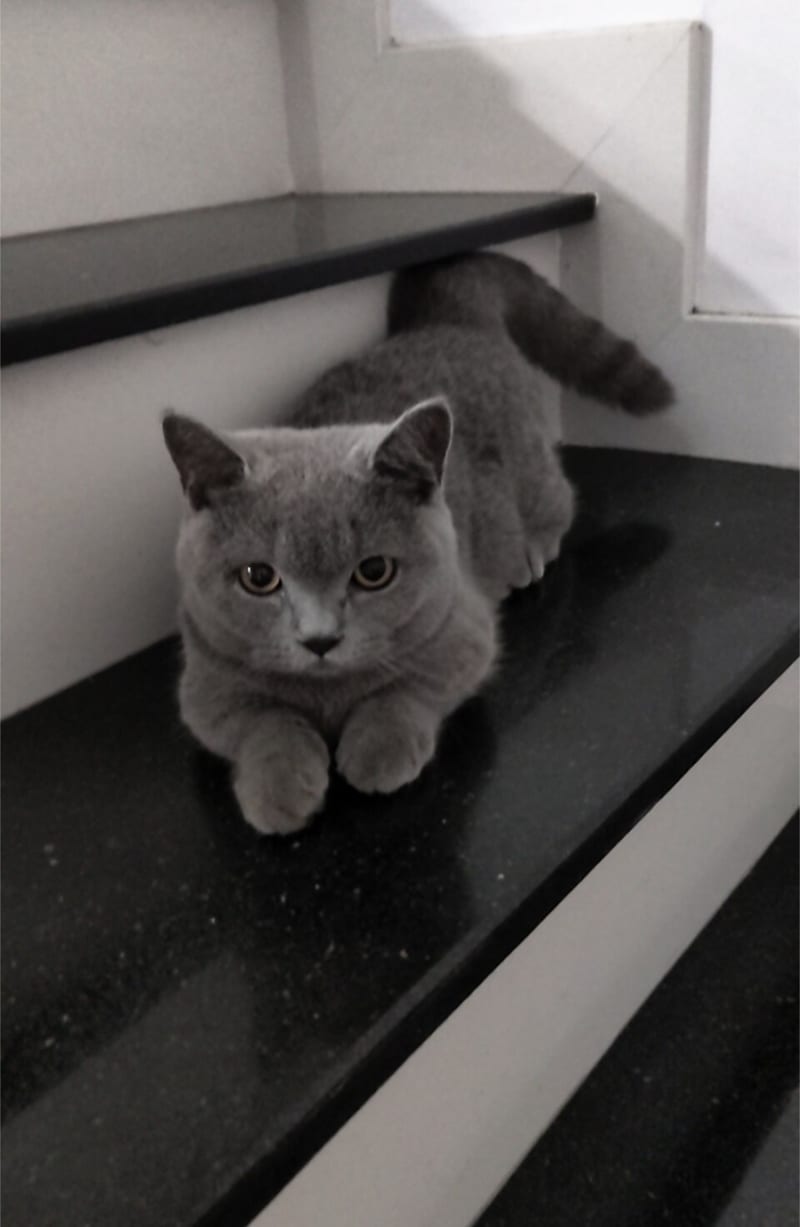
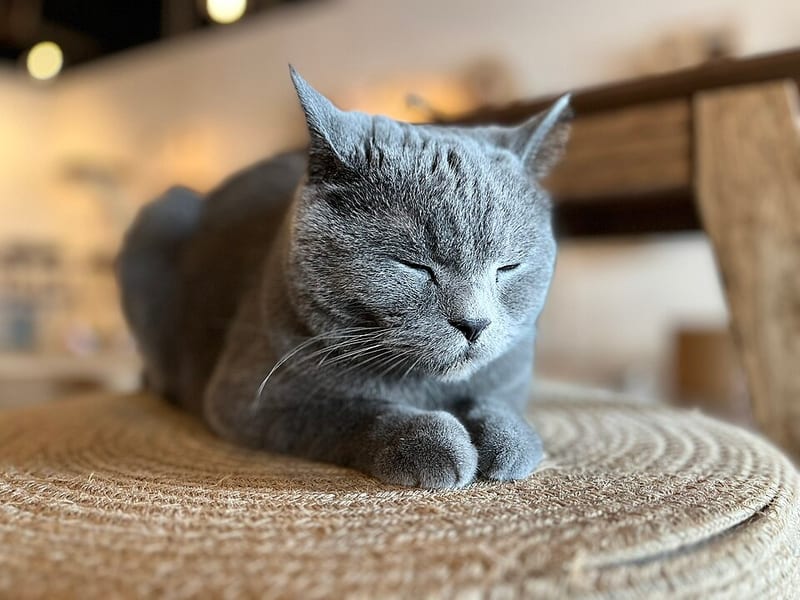
British Shorthair photos
Videos featuring a British Shorthair
Next steps
Frequently asked questions
Is a British Shorthair good for an apartment?
Generally yes: we rate its apartment fit as very high, as long as its exercise needs (low) are met.
Can a British Shorthair be left alone?
It usually copes fairly well with time alone, though no pet should be left alone for too long.
How much does a British Shorthair weigh?
The standard gives no weight. At ideal body condition, 13 males averaged 5.1 kg and 10 females 3.6 kg (Kienzle & Moik, 2011).
What is a British Shorthair’s temperament like?
FIFe describes it as calm, affectionate, easy-going, not very vocal and able to be left alone longer than some other breeds.
How long do British Shorthairs live?
In the UK, median lifespan was 11.8 years (O’Neill et al., 2015). Another study gives a life expectancy at birth of 9.6 years for the British group (Teng et al., 2024).
Which health problems should I watch for in a British Shorthair?
Mainly hypertrophic cardiomyopathy, more common in males, and excess weight. Blood type B is also common in the breed.
Similar breeds
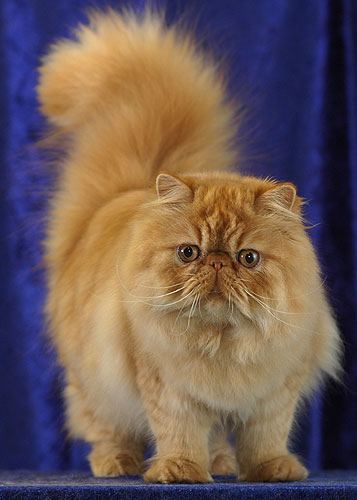
Persian
Quiet · Gentle · Placid
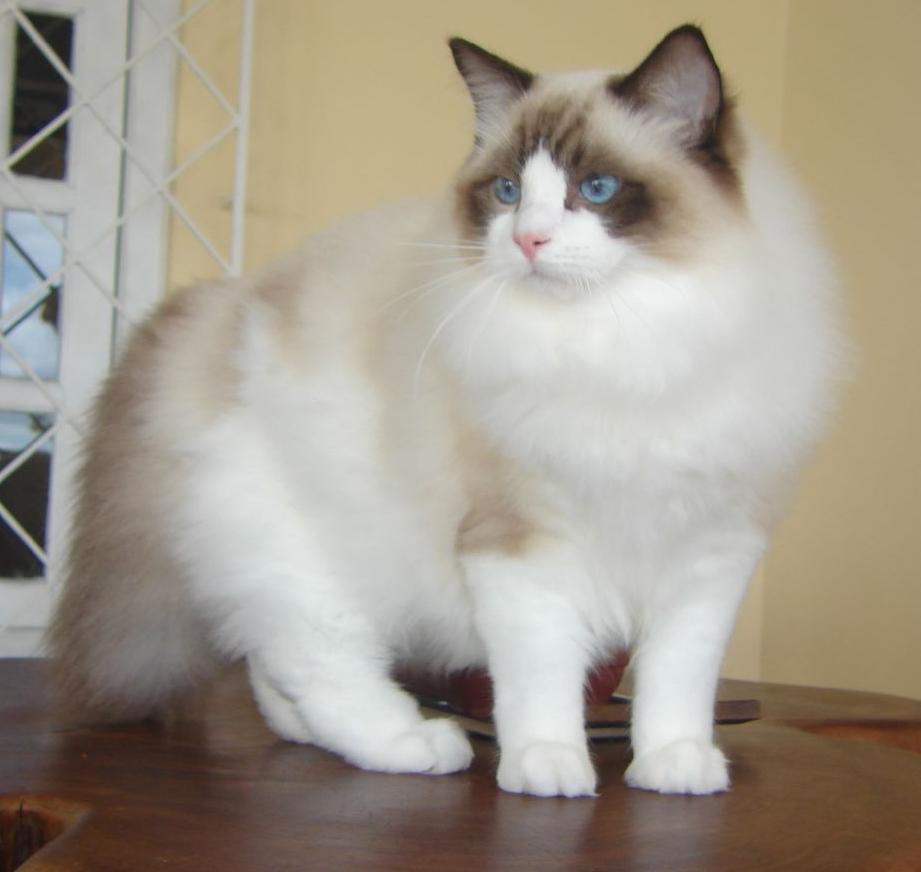
Ragdoll
Docile · Affectionate · Calm
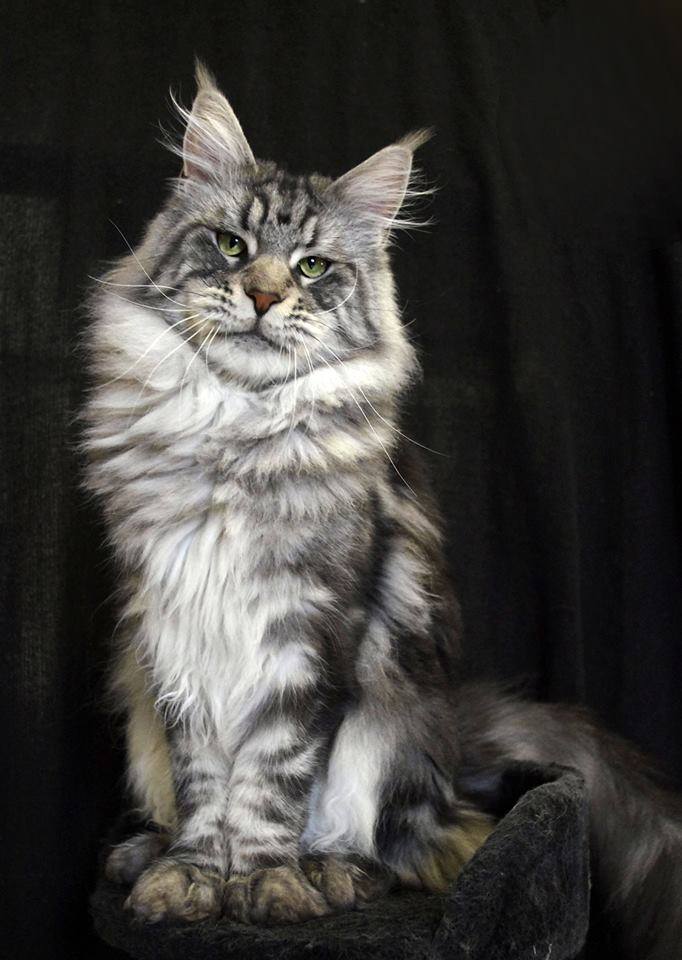
Maine Coon
Gentle giant · Sociable · Playful
Sources and review
- Breed reference: Cat Fanciers’ Association, British Shorthair breed page
- Wikidata entry: Q29273
- FIFe, British Longhair/Shorthair (BLH-BSH) breed standard, version 01.07.2026
- FIFe, British Longhair/Shorthair breed profile
- Kienzle E., Moik K. (2011), British Journal of Nutrition 106(S1), body weight of pure-bred adult cats
- Cat Fanciers’ Association, British Shorthair breed page
- Murphy B.J. et al. (2023), Frontiers in Veterinary Science, British Shorthair bodyweight in Australia
- Granström S. et al. (2011), Journal of Veterinary Internal Medicine, HCM prevalence in British Shorthair cats
- Knottenbelt C.M. et al. (1999), Journal of Small Animal Practice, blood types of pedigree cats in the UK
- Anderson H. et al. (2022), PLoS Genetics, genetic variants across cat breeds
- Ukawa H. et al. (2026), BMC Genomics, PKD1 variant frequencies in Japanese cats
- Maggio-Price L., Dodds W.J. (1993), JAVMA, haemophilia B in a family of British Shorthair cats
- O’Neill D.G. et al. (2015), Journal of Feline Medicine and Surgery, longevity and mortality of cats in England
- Teng K.T. et al. (2024), Journal of Feline Medicine and Surgery, life tables for companion cats in the UK
- LOOF, Livre officiel des origines félines
- In-depth content updated: November 18, 2026
- Last reviewed: October 7, 2026