Cat · Toronto, Canada
Sphynx cat
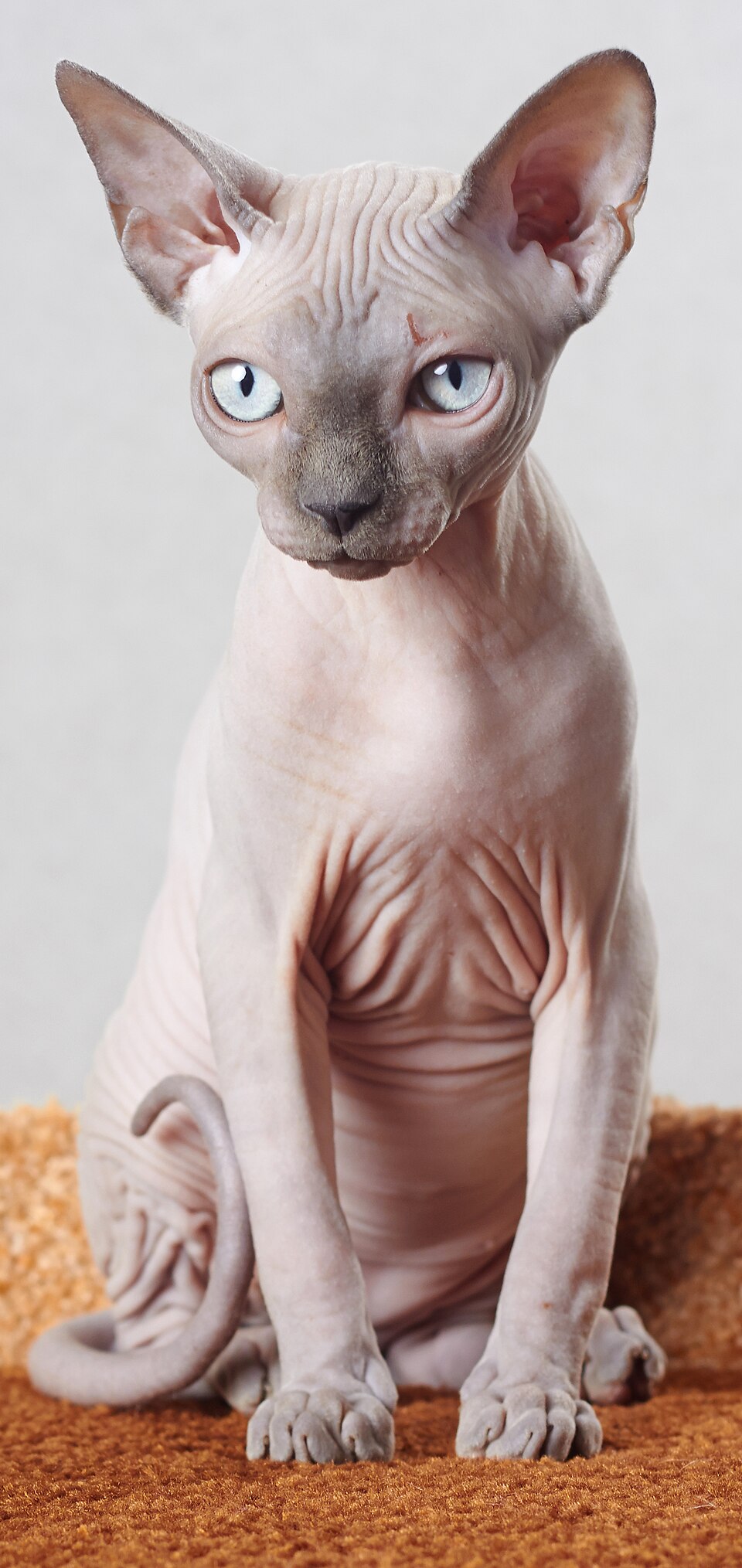
Sphynx cats are hairless or near-hairless cats that originated in Canada in the 1960s. They are warm to the touch, energetic and very attached to people.
- Extroverted
- Energetic
- Clingy
Last reviewed: October 7, 2026
Key facts
| Origin | Toronto, Canada |
|---|---|
| Size | Medium |
| Coat | Looks hairless; fine down allowed |
| Colours | All colours and patterns allowed |
| Life expectancy at birth (UK study) | 6.7 years on average (see Health) |
Typical ranges; individuals vary.
Care and needs
Regular baths to remove skin oils; protect from cold and sun.
Good to know
No coat does not mean no allergens: cat allergens come mainly from saliva and skin.
This is general information. For your own animal’s health, ask a vet.
At a glance
- Energy
- Exercise needs
- Grooming
- Shedding
- Family-friendly
- With other pets
- Apartment-friendly
- Trainability
- Copes with time alone
- Vocal
PawShorts editorial estimates (1–5), not measurements. Use them to compare breeds with each other.
Hairless, downy, black or grey? What the standard says
The FIFe standard (version of 1 January 2026) describes a cat that appears hairless but may be covered with short, fine down, with a chamois-like feel. Short, soft, fine hair is allowed on the feet, the bridge of the nose, the cheekbones, the back of the ears and the tip of the tail, so a Sphynx with some hair in those places is still within standard.
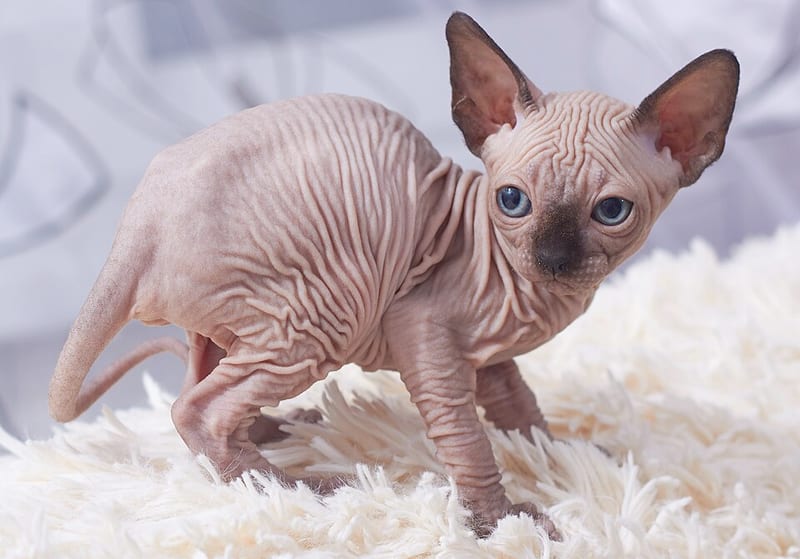
Wrinkled skin is desirable, especially around the muzzle, between the ears and around the shoulders, as long as it does not affect the cat’s normal functions. All colours and patterns are allowed, with or without white: black, blue (grey), chocolate, red, cream, tortie, pointed and more.
The standard calls for a medium-sized cat of surprising weight for its size, with a neck that is powerful, especially in males. It gives no weight figures for males or females.
Health: what the studies show
Heart. Hypertrophic cardiomyopathy (HCM), a thickening of the heart muscle, is common in the breed. At the Alfort veterinary school in France, 23 of 114 Sphynx cats presented for cardiac screening had HCM and 16 had a congenital heart defect, with HCM becoming more common with age (Chetboul et al., 2012). In New Zealand, 20 of 55 Sphynx cats screened (40%), median age 5.8 years, had HCM (Seo et al., 2024). These are not random samples: read them as orders of magnitude, not national rates.
Skin. Malassezia yeasts were found on the skin of 26 of 32 Sphynx cats (81%) versus none of 10 domestic shorthair controls; all 5 Sphynx cats with greasy seborrhoea carried them (Åhman & Bergström, 2009). International Cat Care also lists skin disease among the breed’s problems.
Muscles. An inherited congenital myasthenic syndrome (COLQ gene) has been described in the Sphynx and Devon Rex. It is recessive: a kitten is affected only if both parents carry the variant. In a European panel of 81 Sphynx cats, about 3.7% were healthy carriers (Abitbol et al., 2015). A DNA test is available.
Life expectancy. In a UK study of 7,936 cats that died under veterinary care, the Sphynx had the shortest life expectancy at birth of the breeds analysed: 6.68 years on average (95% confidence interval 4.53–8.83), against 11.74 years for cats overall (Teng et al., 2024). This average includes early deaths and rests on only 18 Sphynx cats: many cats live longer. We found no lifespan range published by an accessible breed organisation.
Daily care
With no coat to absorb it, sebum stays on the skin, which turns greasy and needs regular cleaning (baths, suitable wipes), along with skin folds, ears and claw folds. The right rhythm depends on the cat: ask your vet rather than following a fixed schedule.
International Cat Care notes that the hairless Sphynx may suffer if exposed to cold weather or direct sunlight. A warm home, warm beds and no prolonged sun exposure are the basics.
Drawbacks to know before you commit
The Sphynx has many fans for its personality, but several points should weigh in the decision:
- Health to watch, especially the heart (see above), with vet follow-up costs to plan for.
- Regular skin care, more demanding than for a shorthaired cat.
- Sensitivity to cold and sun, which makes it an indoor cat.
- A very people-oriented cat that copes poorly with time alone (PawShorts editorial estimate).
- It is not hypoallergenic: the main cat allergen (Fel d 1) is produced by glands including the skin’s sebaceous glands, and Sphynx cats produce it too.
- An ethical question: International Cat Care considers a coat essential for a cat and says hairless cats should not be bred.
Before buying or adopting a Sphynx
In France, only a cat registered in a pedigree book recognised by the Ministry of Agriculture (the LOOF) can be sold as a pedigree cat (Rural Code, article L214-8). Without a LOOF pedigree, the advert must state that the cat does not belong to a breed.
We do not give prices: they vary by breeder and we have no reliable, current source. Whatever the price, here is what to ask:
- The parents’ heart ultrasound results from a vet, with dates.
- The parents’ DNA test result for congenital myasthenic syndrome (COLQ).
- The pedigree, the vet certificate and the kitten’s identification.
- Consider rescues and shelters too: adult Sphynx cats sometimes need a new home.
This is general information. For your own animal’s health, ask a vet.
Sphynx photos
Videos featuring a Sphynx
Next steps
Frequently asked questions
Is a Sphynx good for an apartment?
Generally yes: we rate its apartment fit as very high, as long as its exercise needs (moderate) are met.
Can a Sphynx be left alone?
This needs planning: we rate its tolerance of time alone as very low. Arrange walkers, sitters or company if you are out for long periods.
Is the Sphynx hypoallergenic?
No. The main cat allergen, Fel d 1, is produced by the cat’s glands, including the skin’s sebaceous glands. Sphynx cats produce it too, and levels vary mostly from one cat to another. Anyone with allergies should spend time with the cat before committing and talk to their doctor.
Can a Sphynx have hair?
Yes. The standard allows fine down on the body and short hair on the feet, nose, cheekbones, back of the ears and tail tip.
How long do Sphynx cats live?
In a large UK study (Teng et al., 2024), Sphynx life expectancy at birth was only 6.68 years on average, the shortest of the breeds analysed, with wide uncertainty (4.53–8.83 years). This average includes early deaths: many Sphynx cats live longer.
What are the downsides of a Sphynx cat?
Mainly health (hypertrophic cardiomyopathy is common), regular skin care, sensitivity to cold and sun, and a strong need for company. It is not hypoallergenic either.
Are there black or grey Sphynx cats?
Yes. All colours are allowed, including black and blue (grey), as well as white, red, cream, tortie and pointed, with or without white.
Similar breeds
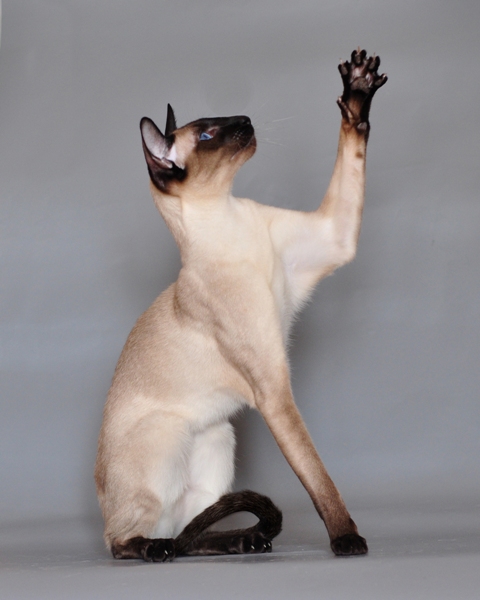
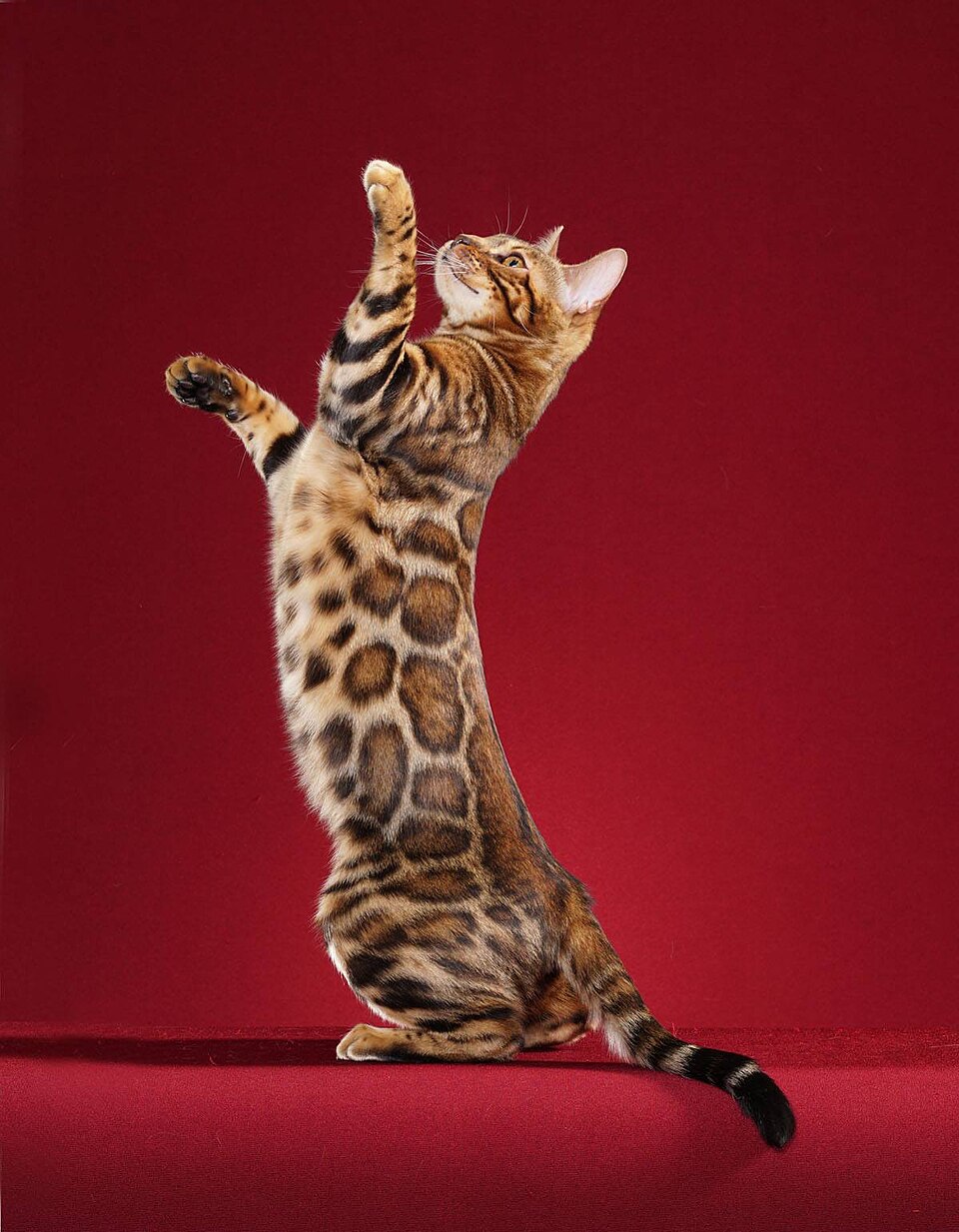
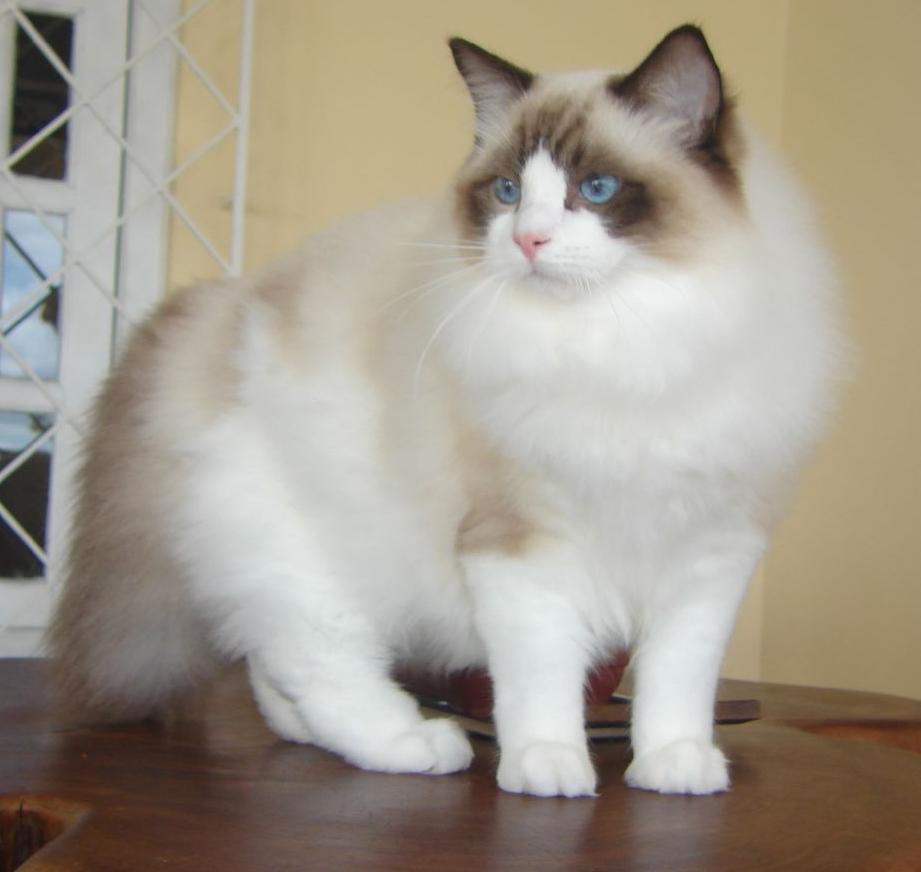
Sources and review
- Breed reference: Cat Fanciers’ Association, Sphynx breed page
- Wikidata entry: Q42712
- FIFe, Sphynx (SPH) breed standard, version 01.01.2026
- Chetboul V. et al. (2012), Journal of Veterinary Cardiology 14(4), Sphynx echocardiographic screening
- Seo J. et al. (2024), Animals 14(18):2629, HCM and ALMS1 in Sphynx cats in New Zealand
- Åhman S.E., Bergström K.E. (2009), Journal of Feline Medicine and Surgery 11(12), Malassezia carriage in Sphynx cats
- Abitbol M. et al. (2015), PLoS ONE 10, COLQ variant and congenital myasthenic syndrome
- Teng K.T. et al. (2024), Journal of Feline Medicine and Surgery 26(5), life tables of cats in the UK
- International Cat Care, Sphynx (updated 26 Sept. 2025)
- International Cat Care, Should I keep my cat indoors or allow outdoor access?
- Hazel S., Henning J. (2022), The Conversation, Do hypoallergenic cats even exist?
- LOOF, Livre officiel des origines félines
- In-depth content updated: November 18, 2026
- Last reviewed: October 7, 2026