Dog · Switzerland
Bernese Mountain Dog
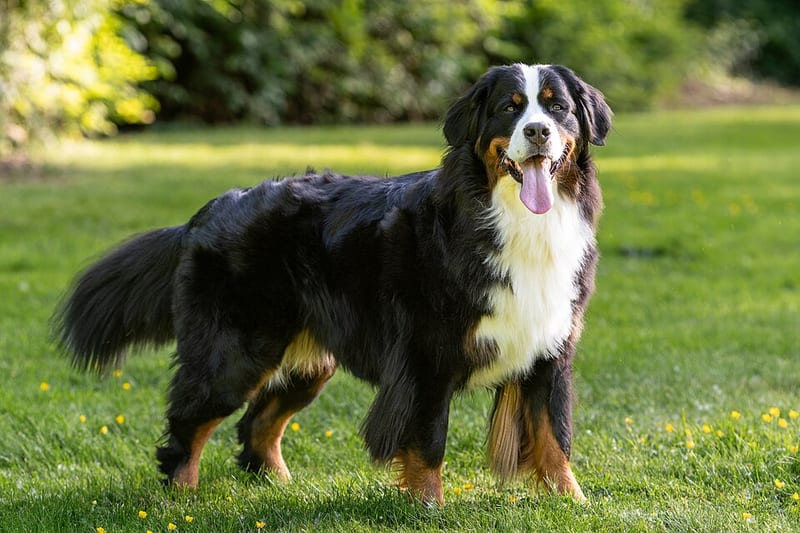
Bernese Mountain Dogs are large, tricolour farm dogs from the canton of Bern in Switzerland, once used to pull carts and guard farms. They are calm, gentle and affectionate.
- Gentle
- Calm
- Affectionate
Last reviewed: October 7, 2026
Key facts
| Origin | Switzerland |
|---|---|
| Size | Large |
| Adult weight | 32–52 kg |
| Life expectancy | 7–10 years |
| Height at withers (FCI) | Male 64–70 cm, female 58–66 cm |
| Median adult weight (UK study) | Male 48.8 kg, female 42.5 kg |
| Median lifespan (Swiss study) | 8.4 years (see Health) |
Typical ranges; individuals vary.
Care and needs
Moderate daily exercise, avoid heat. Thick double coat: brush several times a week.
Good to know
A short-lived giant compared with most breeds; ask breeders about health screening and discuss it with a vet.
This is general information. For your own animal’s health, ask a vet.
At a glance
- Energy
- Exercise needs
- Grooming
- Shedding
- Family-friendly
- With other pets
- Apartment-friendly
- Trainability
- Copes with time alone
- Vocal
PawShorts editorial estimates (1–5), not measurements. Use them to compare breeds with each other.
What is a Bernese Mountain Dog’s temperament like?
The FCI standard (No. 45) describes it as self-confident, attentive, vigilant and fearless in everyday situations, good-natured and devoted to its own people, self-assured and placid towards strangers, of medium temperament and docile. Aggressive, overly shy or anxious dogs are disqualified in the show ring.
Originating in the Canton of Bern in Switzerland, it was a farm guard, draught and cattle dog. It was once called the “Dürrbächler”, after a hamlet near Riggisberg. We found no behaviour study specific to the breed.
Size, weight, coat and colours
The standard sets a height at the withers of 64 to 70 cm for males (ideal 66 to 68 cm) and 58 to 66 cm for females (ideal 60 to 63 cm), with a rather compact body. It gives no weight. The American Kennel Club gives 80 to 115 lb (36 to 52 kg) for males and 70 to 95 lb (32 to 43 kg) for females. In a UK study of 1,513 Bernese Mountain Dogs under veterinary care, median adult weight was 48.8 kg for males and 42.5 kg for females (O’Neill et al., 2026).
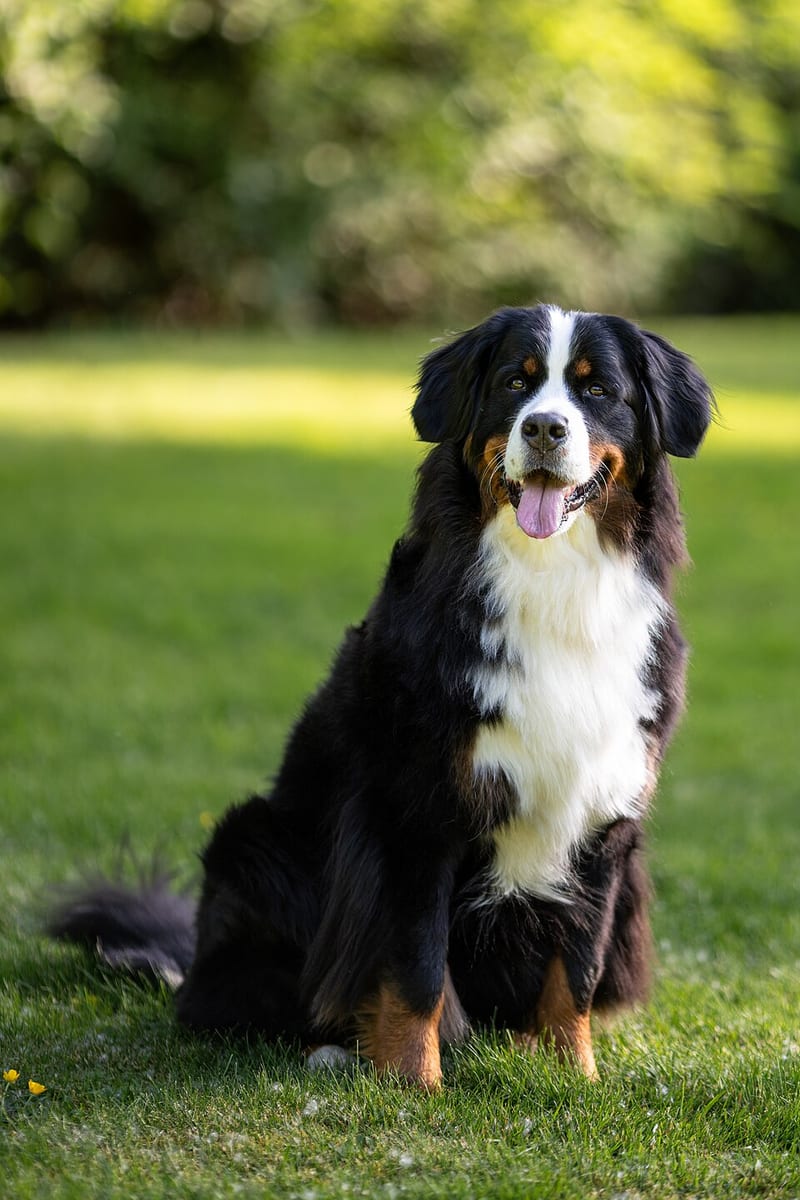
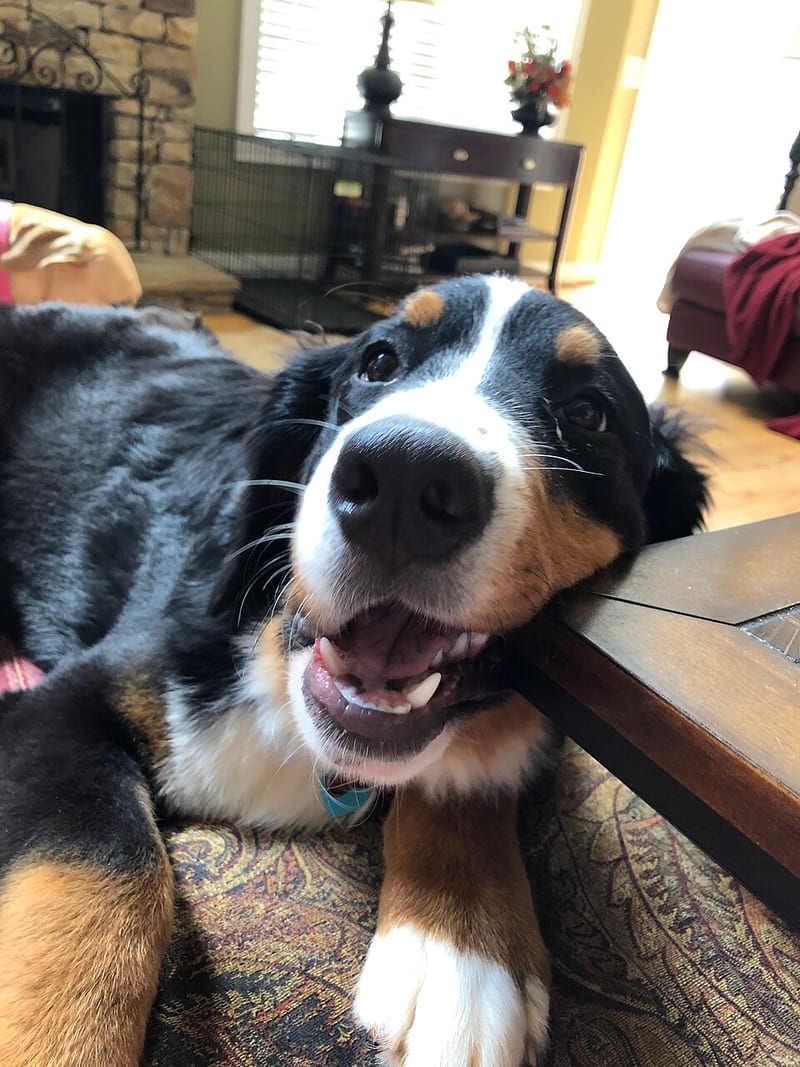
The coat is long, shiny, straight or slightly wavy. The colour is tricolour: jet black, rich tan markings on the cheeks, above the eyes, on the legs and chest, and white markings (blaze and muzzle band, white chest). A coat that is not tricolour, a short coat or blue eyes disqualify.
Health: what the studies show
Cancer. This is the breed’s main problem. In a UK survey, 45.7% of 394 Bernese deaths were cancer-related, against 27% on average across all breeds (Adams et al., 2010 data, cited by Dobson, 2013). In a Swiss study, tumours caused 58.3% of deaths (Klopfenstein et al., 2016). Histiocytic sarcoma, an aggressive cancer, is thought to affect about a quarter of Bernese Mountain Dogs, with a mean age of onset of 6.5 years and an estimated survival of 49 days after diagnosis (Abadie et al., 2009).
Joints. In Sweden, of 3,921 Bernese Mountain Dogs X-rayed, 19.9% had hip dysplasia (grades C to E, 8.2% for grades D and E) and 17.0% elbow dysplasia (Engdahl et al., 2026).
Spinal cord. Degenerative myelopathy, a progressive paralysis of the hind legs, is linked to the SOD1 gene. In 2,413 genotyped Bernese, 38% of gene copies carried the risk variant, and a second variant appears to be specific to the breed (Zeng et al., 2014). A DNA test exists.
Inbreeding. A genomic study measured a high average inbreeding coefficient (0.395 in 33 dogs), rising sharply over the last 30 years (Letko et al., 2023).
Life expectancy. It is short. In Switzerland, median lifespan was 8.4 years (8.8 for females, 7.7 for males) (Klopfenstein et al., 2016). In the UK, median age at death was 7.7 years in a study of giant breeds (O’Neill et al., 2026) and median survival 10.1 years in another (McMillan et al., 2024).
Drawbacks to know before you commit
Gentle and calm, the Bernese Mountain Dog comes with significant trade-offs:
- A short life expectancy, often around 8 years.
- A cancer risk well above the average for dogs.
- A large dog of roughly 40 to 50 kg, with risks of hip and elbow dysplasia.
- A long, dense coat that needs regular brushing.
Before buying or adopting a Bernese Mountain Dog
In France, only a dog registered in the LOF can be sold as a pedigree dog (Rural Code, article L214-8). We do not give prices, for lack of a reliable, current source. Here is what to ask:
- Both parents’ official hip and elbow dysplasia screening results.
- The SOD1 DNA test result (degenerative myelopathy).
- The age and cause of death of the grandparents, to judge longevity and cancer in the line.
- The pedigree, the vet certificate and the puppy’s identification. Consider shelters and breed rescues too.
This is general information. For your own animal’s health, ask a vet.
Bernese Mountain Dog photos
Next steps
Frequently asked questions
Is a Bernese Mountain Dog good for an apartment?
It is not ideal: apartment fit is very low and exercise needs are moderate. A home with outdoor space and lots of outings suits it better.
Can a Bernese Mountain Dog be left alone?
This needs planning: we rate its tolerance of time alone as low. Arrange walkers, sitters or company if you are out for long periods.
How long do Bernese Mountain Dogs live?
Not long: 8.4 years median lifespan in Switzerland (Klopfenstein et al., 2016), 7.7 years median age at death in the UK (O’Neill et al., 2026).
Why do Bernese Mountain Dogs live such short lives?
Mainly because of cancer: it caused 45.7% of deaths in a UK survey and 58.3% in a Swiss study. Histiocytic sarcoma is particularly common in the breed.
How much does a Bernese Mountain Dog weigh?
The FCI standard gives no weight. The American Kennel Club gives 80 to 115 lb (36 to 52 kg) for males and 70 to 95 lb (32 to 43 kg) for females. In the UK, measured median adult weight was 48.8 kg for males and 42.5 kg for females (O’Neill et al., 2026).
What is a Bernese Mountain Dog’s temperament like?
The FCI standard describes it as self-confident, vigilant, good-natured, devoted to its people, placid towards strangers and docile.
Similar breeds
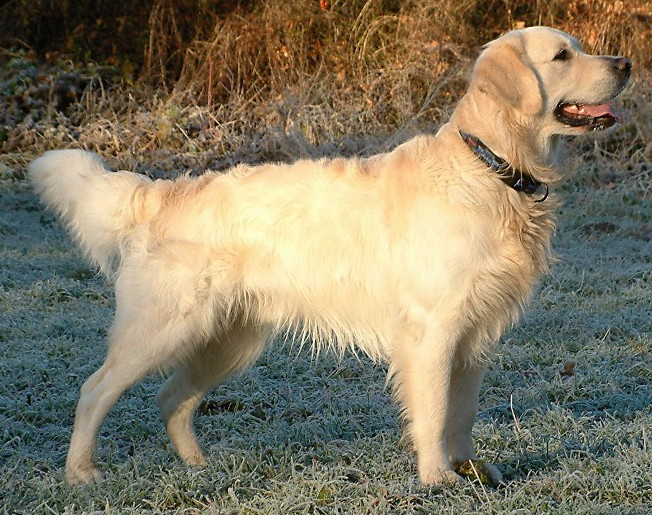
Golden Retriever
Friendly · Eager to please · Playful
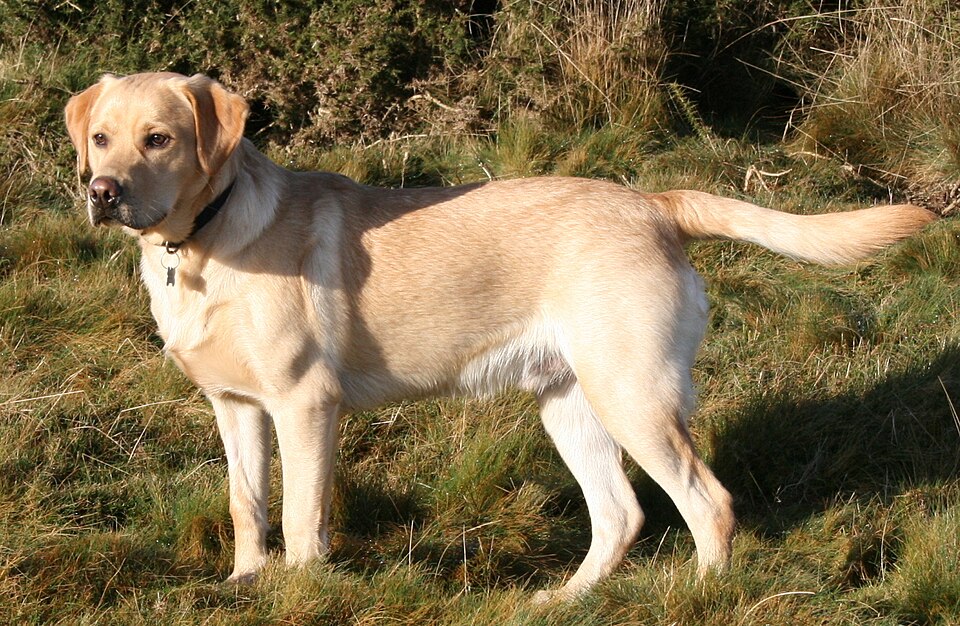
Labrador Retriever
Outgoing · Even-tempered · Active
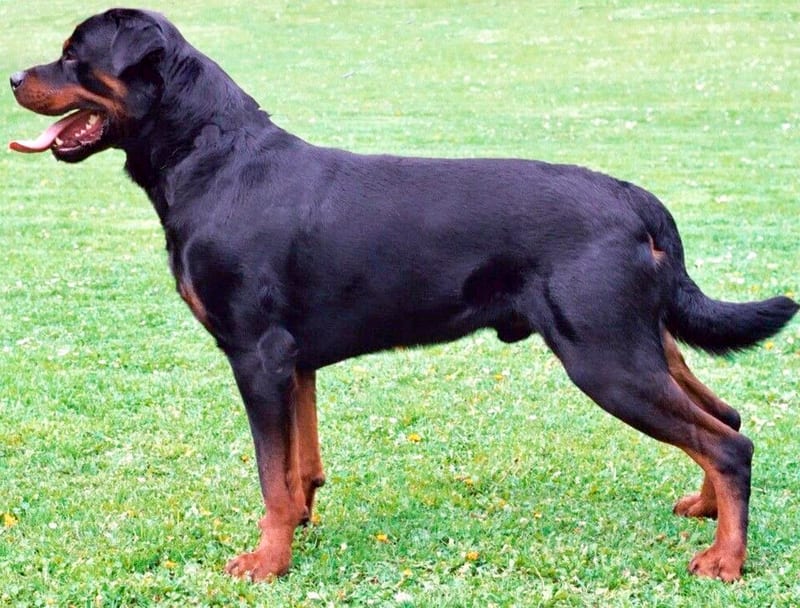
Rottweiler
Loyal · Confident · Calm
Sources and review
- Breed reference: American Kennel Club
- Wikidata entry: Q37608
- FCI, Bernese Mountain Dog standard No. 45 (05.05.2003)
- American Kennel Club, Bernese Mountain Dog breed page (height, weight, life expectancy)
- O’Neill D.G. et al. (2026), Companion Animal Health and Genetics, giant dog breeds under primary veterinary care in the UK
- Klopfenstein M. et al. (2016), BMC Veterinary Research, life expectancy and causes of death in Bernese Mountain Dogs in Switzerland
- McMillan K.M. et al. (2024), Scientific Reports, longevity of companion dog breeds in the UK
- Dobson J.M. (2013), ISRN Veterinary Science, breed predispositions to cancer in pedigree dogs
- Abadie J. et al. (2009), Journal of Heredity, histiocytic sarcoma in Bernese Mountain Dogs
- Engdahl K. et al. (2026), Veterinary Record, hip and elbow dysplasia screening in Swedish dogs
- Zeng R. et al. (2014), Journal of Veterinary Internal Medicine, SOD1 mutations and degenerative myelopathy across breeds
- Letko A. et al. (2023), Genes, genomic diversity and inbreeding in Bernese Mountain Dogs
- Société Centrale Canine, Livre des origines français (LOF)
- In-depth content updated: November 18, 2026
- Last reviewed: October 7, 2026