Dog · Scotland
Golden Retriever
Golden Retrievers are large sporting dogs developed in 19th-century Scotland to retrieve game from land and water. They are known for a gentle, people-focused temperament and a dense water-repellent coat.
- Friendly
- Eager to please
- Playful
Last reviewed: October 7, 2026

Key facts
| Origin | Scotland |
|---|---|
| Size | Large |
| Adult weight | 25–34 kg |
| Life expectancy | 10–12 years |
| Height at withers (FCI) | Male 56–61 cm, female 51–56 cm |
| Accepted colours | Any shade of gold or cream, not red or mahogany |
| Coat | Flat or wavy, feathered, water-resistant undercoat |
Typical ranges; individuals vary.
Care and needs
Needs daily exercise and mental work such as retrieving games. The double coat sheds heavily and benefits from brushing several times a week.
Good to know
Rarely suited to long hours alone. Grows large quickly, so early leash training matters.
This is general information. For your own animal’s health, ask a vet.
At a glance
- Energy
- Exercise needs
- Grooming
- Shedding
- Family-friendly
- With other pets
- Apartment-friendly
- Trainability
- Copes with time alone
- Vocal
PawShorts editorial estimates (1–5), not measurements. Use them to compare breeds with each other.
Size, weight and temperament: what the standard says
The FCI standard (No. 111) gives Great Britain as the Golden Retriever’s country of origin and classes it as a retriever (Group 8). It sets a height at the withers of 56–61 cm for males and 51–56 cm for females. Despite the “size and weight” heading, it gives no weight.
It describes the breed as biddable, intelligent, with natural working ability, kindly, friendly and confident. An aggressive or overly shy dog is disqualified. The coat is flat or wavy with good feathering and a dense, water-resistant undercoat. Any shade of gold or cream is allowed, but not red or mahogany; a few white hairs are allowed on the chest only.
How much does a Golden Retriever weigh?
The largest published set of measurements comes from the Golden Retriever Lifetime Study, which follows 3,044 Goldens in the United States. On entry, aged 6 months to 2 years (median 14 months), intact males had a median weight of 29.1 kg and intact females 24.8 kg; neutered dogs were heavier (32.5 kg and 27.5 kg) (Simpson et al., 2017). Many of these dogs had not finished growing, so these figures are on the low side for adults.
Excess weight is common: 29% of dogs were already above ideal body condition on entry, and 33% of dogs still enrolled in 2021 were overweight (Labadie et al., 2022).
Health: what the studies show
Cancer. This is the best-documented issue. In the Golden Retriever Lifetime Study, 70% of the 352 dogs that had died by 31 May 2021 died of cancer. The most common was hemangiosarcoma, a tumour of blood vessels, followed by lymphoma and leukaemia (Labadie et al., 2022). By September 2022, 7.65% of dogs in the study had been diagnosed with hemangiosarcoma (Hillman et al., 2023).
Joints and neutering. In records from the University of California, Davis veterinary hospital (1,247 Goldens), 5% of intact males and 4% of intact females had at least one joint disorder (hip or elbow dysplasia, cruciate ligament tear). This rose to 25% in males neutered before 6 months and 18% in females spayed before 6 months (Hart et al., 2020). The authors suggest waiting beyond one year for males. For females, they suggest leaving them intact or spaying at one year while watching for cancers. Discuss it with your vet.
Elbows. In the UK, Goldens had about three times the odds of elbow disease of crossbred dogs (O’Neill et al., 2020).
Skin. Ichthyosis, which causes flaky, scaly skin, is linked to a PNPLA1 variant that is very common in the breed: of 463 Italian Goldens tested, 37% were carriers and 21% had two copies (De Iorio et al., 2026). Many dogs with two copies show few signs. A DNA test exists.
Life expectancy. In an owner survey of UK Kennel Club registered dogs, the median age at death of Goldens was about 11 years and 9 months (373 deaths) (Lewis et al., 2018).
Drawbacks to know before you commit
Gentle and sociable, the Golden also comes with constraints:
- A high cancer risk in the breed, documented by a large follow-up study.
- A double coat that sheds heavily: brushing several times a week.
- A tendency to gain weight, and joints to protect during growth.
- A dog that copes poorly with long hours alone and needs daily exercise.
Before buying or adopting a Golden Retriever
In France, only a dog registered in the LOF can be sold as a pedigree dog (Rural Code, article L214-8). We do not give prices, for lack of a reliable, current source. Here is what to ask:
- The parents’ hip and elbow X-ray results.
- The parents’ DNA tests, especially for ichthyosis (PNPLA1) and progressive retinal atrophy.
- The age and cause of death of the grandparents, if the breeder knows them.
- The pedigree, the vet certificate and the puppy’s identification. Consider shelters too.
This is general information. For your own animal’s health, ask a vet.
Golden Retriever photos


Videos featuring a Golden Retriever


Next steps
Frequently asked questions
Is a Golden Retriever good for an apartment?
It is not ideal: apartment fit is low and exercise needs are high. A home with outdoor space and lots of outings suits it better.
Can a Golden Retriever be left alone?
This needs planning: we rate its tolerance of time alone as low. Arrange walkers, sitters or company if you are out for long periods.
How tall are male and female Golden Retrievers?
According to the FCI standard, 56–61 cm at the withers for males and 51–56 cm for females.
How much does a Golden Retriever weigh?
The standard sets no weight. In a study of 3,044 young US Goldens aged 6 months to 2 years, intact males had a median weight of 29.1 kg and intact females 24.8 kg (Simpson et al., 2017). Adults are often a little heavier.
Do Golden Retrievers get more cancer than other dogs?
Cancer is their leading documented cause of death: in a large US follow-up study, 70% of the dogs that died died of cancer, mainly hemangiosarcoma and lymphoma (Labadie et al., 2022).
When should a Golden Retriever be neutered?
A University of California, Davis study found more joint disorders in Goldens neutered before 6 months. Its authors suggest waiting beyond one year for males (Hart et al., 2020). Decide with your vet.
Which colours are allowed in Golden Retrievers?
Any shade of gold or cream, but not red or mahogany. A few white hairs are allowed on the chest only.
Similar breeds
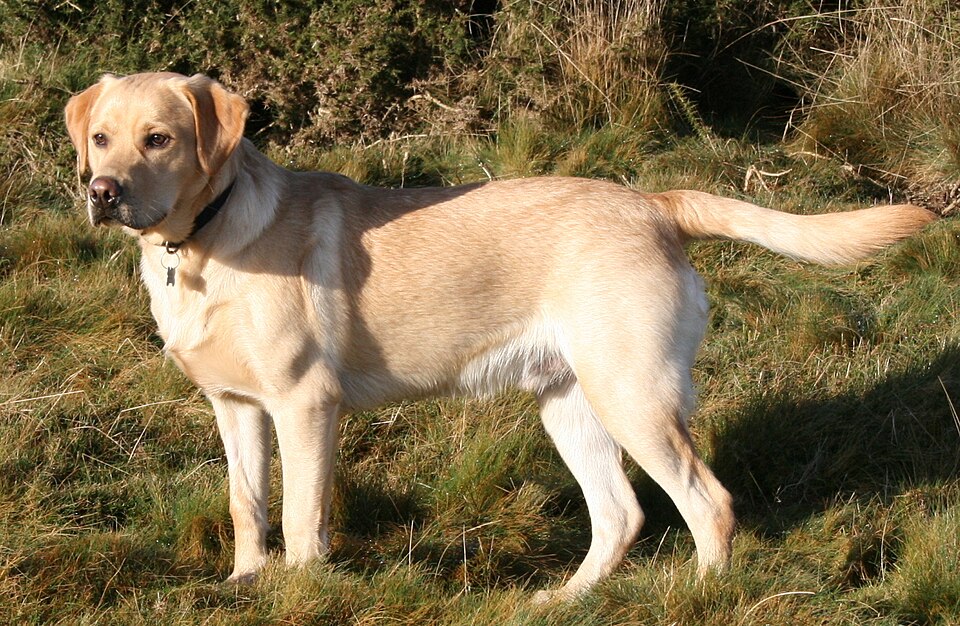
Labrador Retriever
Outgoing · Even-tempered · Active
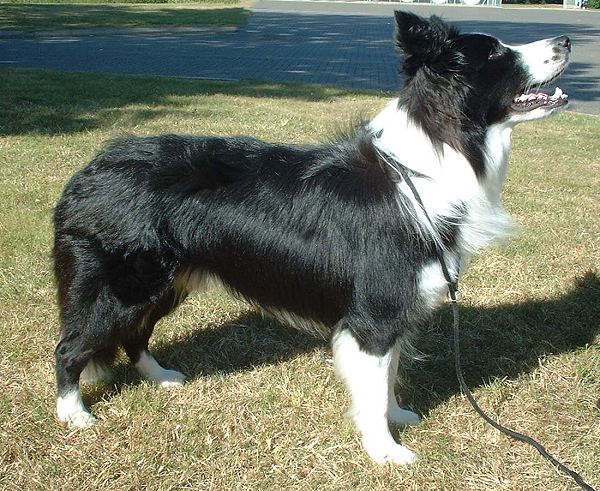
Border Collie
Intense · Smart · Energetic

Cavalier King Charles Spaniel
Gentle · Affectionate · Adaptable
Sources and review
- Breed reference: American Kennel Club
- Wikidata entry: Q38686
- FCI, Golden Retriever standard No. 111 (06.10.2026)
- Simpson M. et al. (2017), Canine Genetics and Epidemiology, population characteristics of Golden Retriever Lifetime Study enrollees
- Labadie J. et al. (2022), PLoS ONE, cohort profile of the Golden Retriever Lifetime Study
- Hillman A. et al. (2023), Veterinary and Comparative Oncology, haemangiosarcoma in the Golden Retriever Lifetime Study
- Hart B.L. et al. (2020), Frontiers in Veterinary Science, age of neutering for 35 breeds of dogs
- O’Neill D.G. et al. (2020), Canine Medicine and Genetics, elbow joint disease in dogs under primary care in the UK
- De Iorio M.G. et al. (2026), PLoS ONE, PNPLA1 ichthyosis in Italian Golden Retrievers
- Lewis T.W. et al. (2018), Canine Genetics and Epidemiology, longevity and mortality in Kennel Club registered breeds
- Société Centrale Canine, Livre des origines français (LOF)
- In-depth content updated: November 18, 2026
- Last reviewed: October 7, 2026