Dog · Anglo-Scottish border
Border Collie
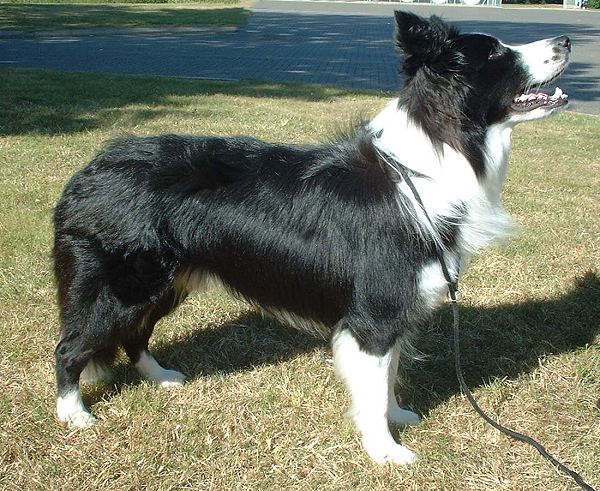
Border Collies are medium-sized sheepdogs from the border between England and Scotland. They are widely regarded as one of the most intense and trainable working breeds.
- Intense
- Smart
- Energetic
Last reviewed: October 7, 2026
Key facts
| Origin | Anglo-Scottish border |
|---|---|
| Size | Medium |
| Adult weight | 14–25 kg |
| Life expectancy | 12–15 years |
| Ideal height at withers (FCI) | Male 53 cm, female slightly less |
| Coat (FCI) | Moderately long or smooth, many colours, white never predominant |
| Life expectancy at birth (UK study) | 12.1 years (see Health) |
Typical ranges; individuals vary.
Care and needs
Needs hours of activity and mental challenge every day: herding, agility, trick training.
Good to know
Under-stimulated Border Collies can develop obsessive behaviours such as chasing shadows or cars.
This is general information. For your own animal’s health, ask a vet.
At a glance
- Energy
- Exercise needs
- Grooming
- Shedding
- Family-friendly
- With other pets
- Apartment-friendly
- Trainability
- Copes with time alone
- Vocal
PawShorts editorial estimates (1–5), not measurements. Use them to compare breeds with each other.
What is a Border Collie’s temperament like?
The FCI standard (No. 297) describes it as tenacious, hard-working, of great tractability, keen, alert, responsive and intelligent, neither nervous nor aggressive. It is a sheepdog (Group 1) from Great Britain, bred for herding work.
Behaviour studies give a more nuanced picture. In a Finnish survey of 13,700 dogs, including 268 Border Collies, the breed stood out for a very high prevalence of compulsive staring and fly snapping, and light or shadow chasing was most often seen in Border Collies (Salonen et al., 2020). A genetic study linked an EPHB1 gene variant specific to working lines with more chasing and biting motor patterns (Jeong et al., 2025).
Temperament also develops with age: in 69 Border Collies followed from 6 months to 2 years, fearfulness, aggression towards people or animals and responsiveness to training increased mainly between 6 and 12 months (Riemer et al., 2016). Early socialisation and training therefore matter a lot.
Size, coat and colours
The standard sets an ideal height at the withers of 53 cm for males, slightly less for females, with a body slightly longer than tall. It gives no weight.
There are two coat varieties, moderately long and smooth, both with a dense undercoat that gives good weather resistance. Many colours are allowed, but white should never predominate. Eyes are brown, except in merles, where one or both may be wholly or partly blue.
Health: what the studies show
Life expectancy. The Border Collie is among the longest-lived breeds in the UK: life expectancy at birth was 12.10 years (Teng et al., 2022), and median lifespan was 13.1 years in another study of 584,734 dogs (McMillan et al., 2024).
Epilepsy. One study describes a high prevalence of idiopathic epilepsy in the breed. Among 116 epileptic Border Collies, the first seizure came at a median of about 33 months, and 60% needed two or more drugs (Santifort et al., 2022).
Inherited diseases that can be screened by DNA test:
- Trapped neutrophil syndrome (TNS): a recessive immune deficiency caused by the VPS13B gene, found in both working and show lines (Shearman & Wilton, 2011).
- Neuronal ceroid lipofuscinosis (CL): a fatal recessive neurodegenerative disease, CLN5 gene (Melville et al., 2005).
- Collie eye anomaly (CEA): NHEJ1 gene; the mutation’s frequency dropped sharply in Border Collies between 2005 and 2019 thanks to testing (Clark et al., 2023).
- Drug sensitivity (MDR1 gene): rare in Border Collies, 1% of gene copies in Germany against 59% in Collies (Gramer et al., 2011).
- Glaucoma linked to the OLFML3 gene, found in 4.4% of UK Border Collies studied (Oliver et al., 2020).
Drawbacks to know before you commit
Brilliant and tireless, the Border Collie is demanding:
- It needs a lot of physical and mental activity every day.
- A bored dog can develop repetitive behaviours such as chasing shadows, lights or cars.
- Its herding instinct can lead it to round up or nip children and animals.
- It is poorly suited to a flat or to long hours alone.
Before buying or adopting a Border Collie
In France, only a dog registered in the LOF can be sold as a pedigree dog (Rural Code, article L214-8). We do not give prices, for lack of a reliable, current source. Here is what to ask:
- The parents’ DNA tests: TNS, CL, CEA and, if possible, MDR1.
- The parents’ hip X-ray results and any epilepsy in the line.
- The line (working or show) and the parents’ lifestyle, to know what activity level to expect.
- The pedigree, the vet certificate and the puppy’s identification. Consider shelters too.
This is general information. For your own animal’s health, ask a vet.
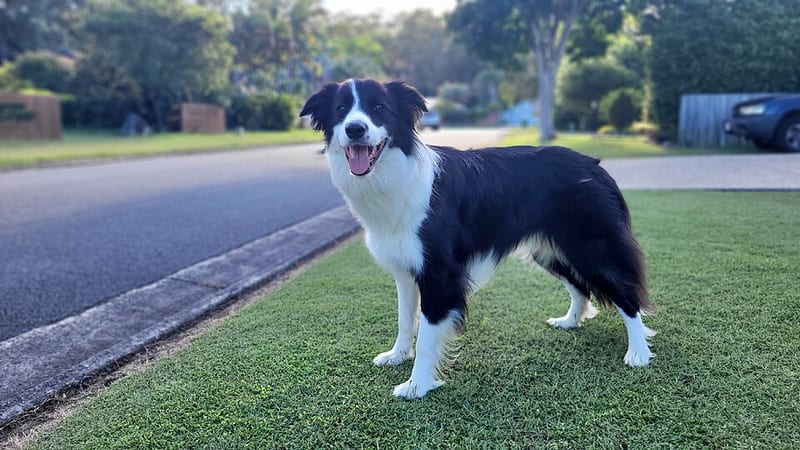
Border Collie photos

Next steps
Frequently asked questions
How much does an adult Border Collie weigh?
Usually between 14–25 kg as an adult. Sex, lines and lifestyle all make a difference: your vet can tell you your own pet’s healthy weight.
Is a Border Collie good for an apartment?
It is not ideal: apartment fit is very low and exercise needs are very high. A home with outdoor space and lots of outings suits it better.
Can a Border Collie be left alone?
This needs planning: we rate its tolerance of time alone as very low. Arrange walkers, sitters or company if you are out for long periods.
What is a Border Collie’s temperament like?
The FCI standard describes it as tenacious, hard-working, of great tractability, keen, alert and intelligent, neither nervous nor aggressive. Studies also show a marked tendency to staring and chasing behaviours, especially when under-stimulated.
Can a Border Collie live in a flat?
It rarely suits: it needs a lot of exercise and mental stimulation every day, and a bored Border Collie easily develops repetitive behaviours.
How tall is a Border Collie?
The FCI standard sets an ideal height at the withers of 53 cm for males, slightly less for females. It gives no weight.
How long do Border Collies live?
They are among the longest-lived breeds: 12.1 years life expectancy at birth in the UK (Teng et al., 2022) and 13.1 years median lifespan in another study (McMillan et al., 2024).
Which DNA tests should I ask for in a Border Collie?
The most common cover TNS, neuronal ceroid lipofuscinosis (CL) and Collie eye anomaly (CEA), sometimes MDR1 too.
Similar breeds
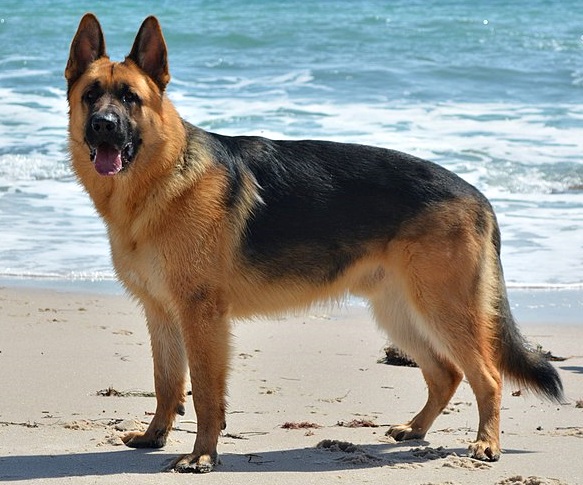
German Shepherd
Loyal · Confident · Intelligent
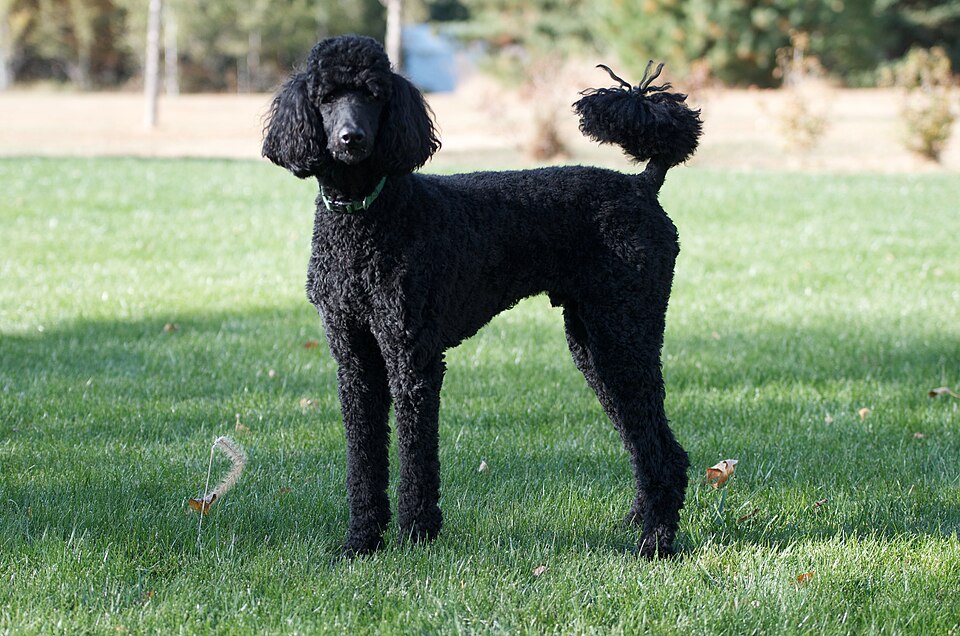
Poodle (Standard)
Intelligent · Active · Proud
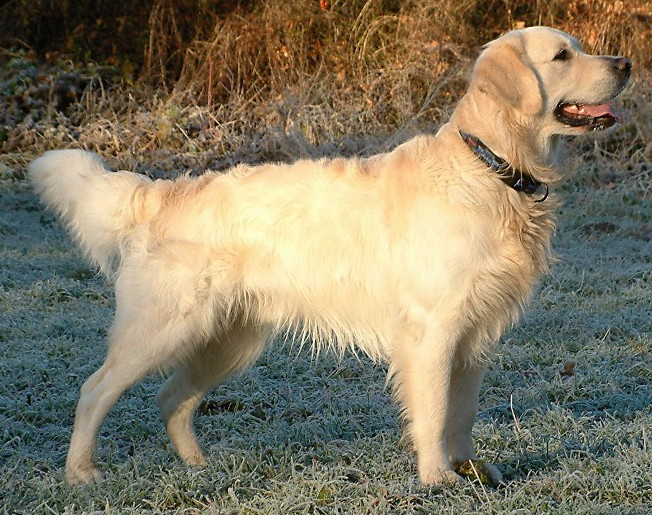
Golden Retriever
Friendly · Eager to please · Playful
Sources and review
- Breed reference: American Kennel Club
- Wikidata entry: Q37710
- FCI, Border Collie standard No. 297 (28.10.2009)
- Salonen M. et al. (2020), Scientific Reports, prevalence and breed differences of canine anxieties
- Riemer S. et al. (2016), Applied Animal Behaviour Science, personality development in Border Collies
- Jeong H. et al. (2025), Science Advances, EPHB1 and herding behaviour in Border Collies
- Teng K.T. et al. (2022), Scientific Reports, life tables for companion dogs in the UK
- McMillan K.M. et al. (2024), Scientific Reports, longevity of companion dog breeds in the UK
- Santifort K.M. et al. (2022), Frontiers in Veterinary Science, idiopathic epilepsy in Border Collies
- Shearman J.R., Wilton A.N. (2011), BMC Genomics, VPS13B mutation and trapped neutrophil syndrome
- Melville S.A. et al. (2005), Genomics, CLN5 mutation and neuronal ceroid lipofuscinosis in Border Collies
- Clark J.A. et al. (2023), Genes, Collie eye anomaly genotype trends
- Gramer I. et al. (2011), The Veterinary Journal, MDR1 mutation frequency in herding breeds in Germany
- Oliver J.A.C. et al. (2020), Veterinary Ophthalmology, OLFML3 variant and glaucoma in Border Collies
- Société Centrale Canine, Livre des origines français (LOF)
- In-depth content updated: November 18, 2026
- Last reviewed: October 7, 2026