Border Collie vs Australian Shepherd
Both breeds side by side, to help you choose based on your lifestyle.
Last reviewed: October 7, 2026
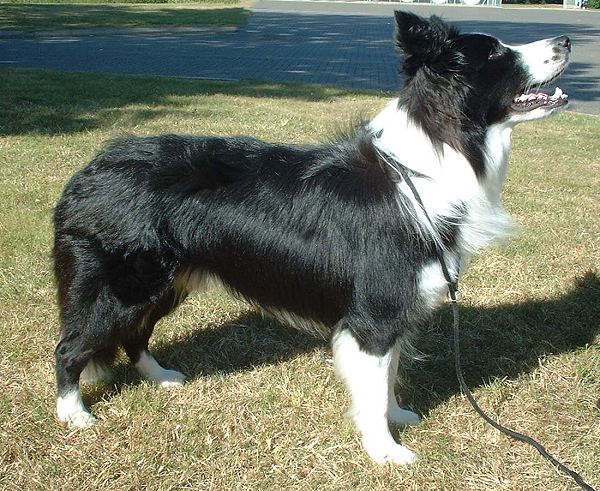
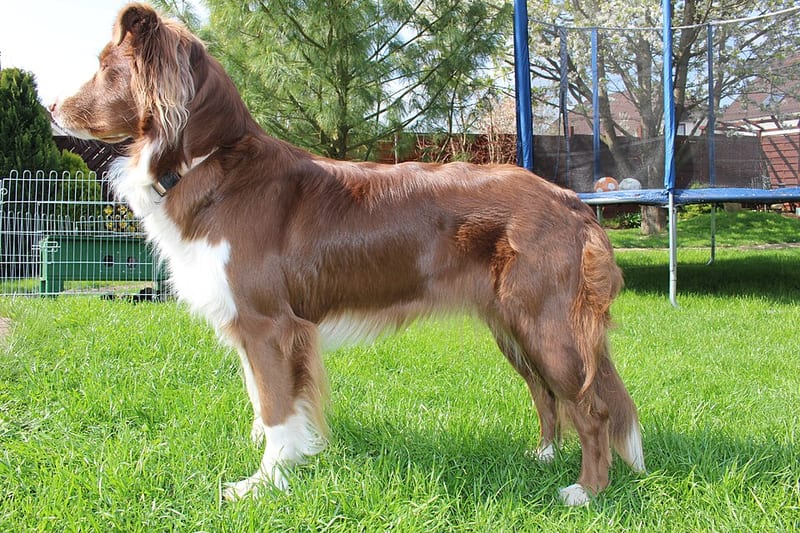
Key differences
- Border Collie and Australian Shepherd have similar profiles in our estimates; look at temperament and care details instead.
What the standards and studies say
Origin. The Border Collie is a British sheepdog (FCI standard No. 297). Despite its name, the Australian Shepherd comes from the United States (FCI standard No. 342). Both are herding dogs in FCI Group 1.
Temperament in the standards. The Border Collie is described as tenacious, hard-working, of great tractability, keen and intelligent, neither nervous nor aggressive. The Australian Shepherd is described as intelligent, with strong herding and guarding instincts and an even disposition, but possibly reserved in initial meetings.
Size and weight. The Border Collie standard sets an ideal height of 53 cm for males, slightly less for females; the Australian Shepherd standard gives 51 to 58 cm for males and 46 to 53 cm for females. Neither gives a weight. The American Kennel Club gives 30 to 55 lb (14 to 25 kg) for the Border Collie, and 50 to 65 lb (23 to 29 kg) for male and 40 to 55 lb (18 to 25 kg) for female Australian Shepherds.
Longevity. In a UK study of 584,734 dogs, median survival was 13.1 years for the Border Collie and 13.7 years for the Australian Shepherd (McMillan et al., 2024). The Australian Shepherd figure rests on only 62 deaths, against nearly 8,000 for the Border Collie, so treat the comparison with care.
Drug sensitivity (MDR1 gene). In Germany, the mutation was found in 1% of gene copies in Border Collies against 22% in Australian Shepherds (Gramer et al., 2011). For an Australian Shepherd, a DNA test is especially worth sharing with your vet.
Breed-specific DNA tests. Border Collie: trapped neutrophil syndrome, neuronal ceroid lipofuscinosis and Collie eye anomaly. Australian Shepherd: hereditary cataract (HSF4), degenerative myelopathy and Collie eye anomaly, plus the risks of merle x merle and short tail x short tail matings. Details are on each breed page.
Behaviour. In a Finnish survey of 13,700 dogs, Border Collies stood out for very frequent staring and chasing of lights or shadows (Salonen et al., 2020). Both breeds need substantial daily physical and mental activity.
Sources
- FCI, Border Collie standard No. 297
- FCI, Australian Shepherd standard No. 342
- American Kennel Club, Border Collie breed page
- American Kennel Club, Australian Shepherd breed page
- McMillan K.M. et al. (2024), Scientific Reports, longevity of companion dog breeds in the UK
- Gramer I. et al. (2011), The Veterinary Journal, MDR1 mutation frequency in herding breeds in Germany
- Salonen M. et al. (2020), Scientific Reports, prevalence and breed differences of canine anxieties
Detailed comparison
| Criterion | Border Collie | Australian Shepherd |
|---|---|---|
| Origin | Anglo-Scottish border | United States (despite the name) |
| Size | Medium | Medium |
| Adult weight | 14–25 kg | 18–29 kg |
| Life expectancy | 12–15 years | 12–15 years |
| Temperament | Intense, Smart, Energetic | Smart, Energetic, Devoted |
| Energy | ||
| Exercise needs | ||
| Grooming | ||
| Shedding | ||
| Family-friendly | ||
| With other pets | ||
| Apartment-friendly | ||
| Trainability | ||
| Copes with time alone | ||
| Vocal |
Weight and life expectancy are typical ranges; individuals vary. 1–5 profiles are PawShorts editorial estimates, not measurements.