Dog · United States (despite the name)
Australian Shepherd
Australian Shepherds are medium-sized herding dogs developed on ranches in the western United States. They are smart, intense workers that need a job to do.
- Smart
- Energetic
- Devoted
Last reviewed: October 7, 2026
Key facts
| Origin | United States (despite the name) |
|---|---|
| Size | Medium |
| Adult weight | 18–29 kg |
| Life expectancy | 12–15 years |
| Preferred height (FCI) | Male 51–58 cm, female 46–53 cm |
| Colours (FCI) | Blue merle, black, red merle, red |
| Median survival (UK study) | 13.7 years (see Health) |
Typical ranges; individuals vary.
Care and needs
Hours of exercise and mental work each day: herding, agility, trick training. Weekly brushing, more during moults.
Good to know
Bored Aussies may try to herd children, cars or other pets.
This is general information. For your own animal’s health, ask a vet.
At a glance
- Energy
- Exercise needs
- Grooming
- Shedding
- Family-friendly
- With other pets
- Apartment-friendly
- Trainability
- Copes with time alone
- Vocal
PawShorts editorial estimates (1–5), not measurements. Use them to compare breeds with each other.
What is an Australian Shepherd’s temperament like?
The FCI standard (No. 342) describes it as an intelligent working dog with strong herding and guarding instincts, a loyal companion with the stamina to work all day. With an even disposition, it is good-natured and seldom quarrelsome, but may be somewhat reserved in initial meetings.
In a preliminary study of 215 dogs rated by their owners (C-BARQ questionnaire), the breed was described as highly trainable and showed low levels of aggression towards people. Coat colour was not associated with temperament (Gazzano et al., 2026).
Size, coat and colours
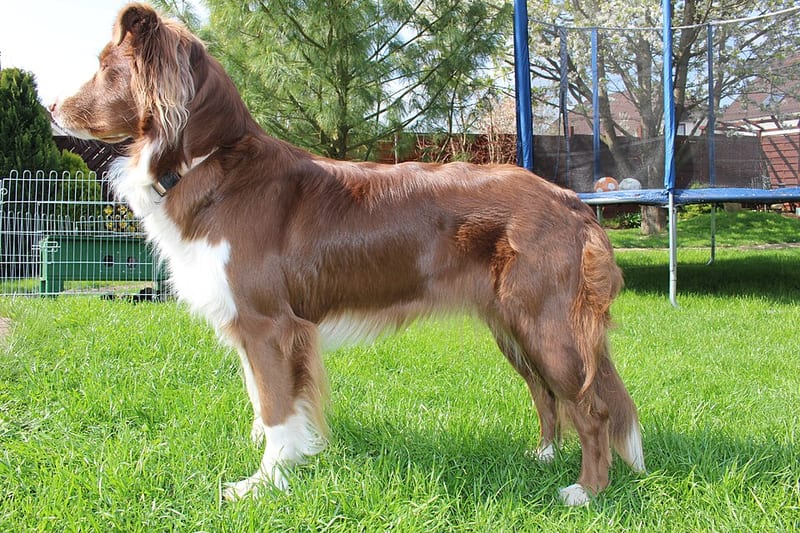
Despite its name, the breed originates in the United States. The standard gives a preferred height of 51 to 58 cm for males and 46 to 53 cm for females, adding that quality should not be sacrificed to size. It gives no weight. The American Kennel Club gives 50 to 65 lb (23 to 29 kg) for males and 40 to 55 lb (18 to 25 kg) for females. We found no measured weight in a study.
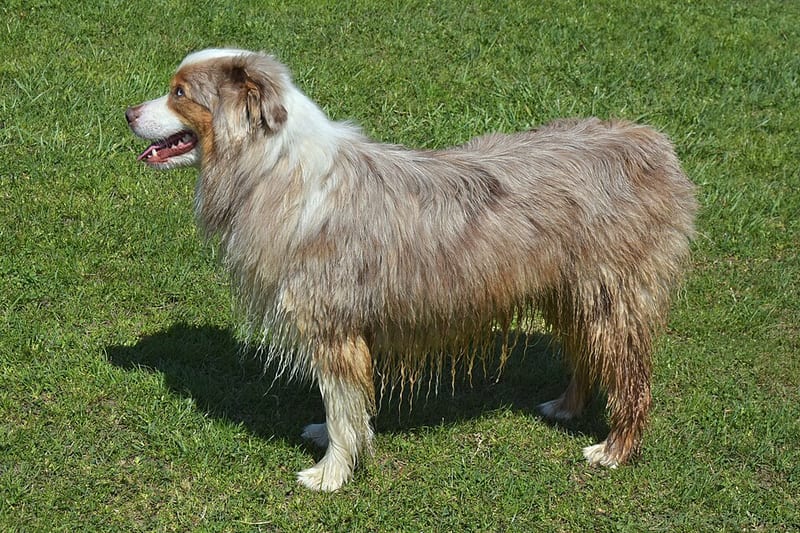
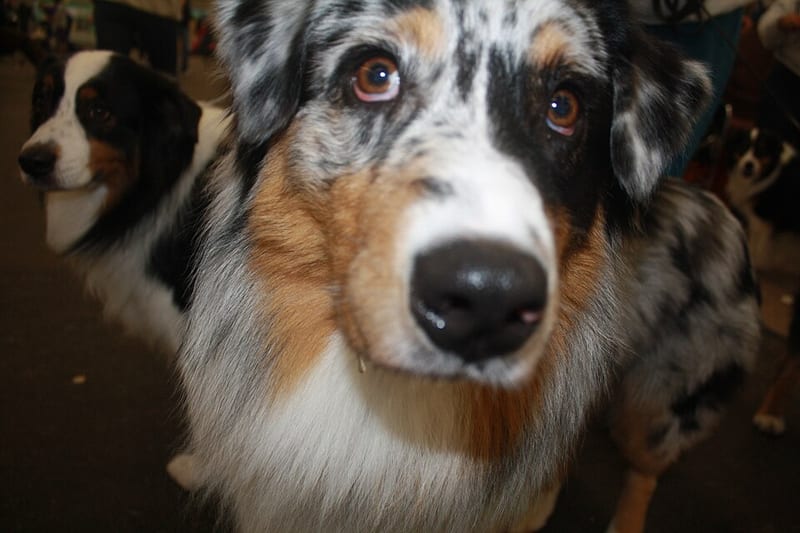
Four colours are allowed with no order of preference: blue merle, black, red merle and red, with or without white or tan markings. The eyes may be brown, blue, amber or any combination. The tail may be naturally long or naturally short.
Health: what the studies show
MDR1. A mutation of the ABCB1 (MDR1) gene makes some drugs, including ivermectin, dangerous for carrier dogs. In Germany, 22% of gene copies carried the mutation in the Australian Shepherd (Gramer et al., 2011). A DNA test tells you whether your dog is affected, which is worth sharing with your vet.
Other DNA tests. In 2,595 Australian Shepherds tested in Europe, the most frequent mutations were for degenerative myelopathy (11.8% of gene copies), HSF4-related hereditary cataract (11.6%, with 23.3% carriers) and Collie eye anomaly (9.7%) (Majchrakova et al., 2023). A carrier of the HSF4 mutation is about 17 times more likely to develop cataracts in both eyes (Mellersh et al., 2009).
Short tail and merle. The natural short-tail gene was present in nearly two-thirds of dogs tested for it, and two copies are fatal to the puppy: mating two short-tailed dogs is not recommended (Majchrakova et al., 2023). Likewise, mating two merles gives 25% “double merle” puppies, often deaf or blind (Varga et al., 2020). Among double merle dogs of several breeds, 25% were deaf in one or both ears, against 3.6% of single merles (Strain et al., 2009).
Epilepsy. In the epileptic Australian Shepherds studied, the disease often ran a moderate to severe course, and 56% had poor seizure control under treatment, unrelated to the MDR1 gene (Weissl et al., 2012).
Life expectancy. In the UK, median survival was 13.7 years, with a lower risk of death than crossbred dogs (McMillan et al., 2024). This figure rests on only 62 deaths.
Drawbacks to know before you commit
The Australian Shepherd is a working dog first and foremost:
- A strong need for physical and mental activity every day.
- Marked herding and guarding instincts, and possible reserve with strangers.
- Sensitivity to some drugs in carriers of the MDR1 mutation.
- Genetic risks linked to merle and short tail, which depend on the breeder’s choices.
Before buying or adopting an Australian Shepherd
In France, only a dog registered in the LOF can be sold as a pedigree dog (Rural Code, article L214-8). We do not give prices, for lack of a reliable, current source. Here is what to ask:
- The parents’ DNA test results: MDR1, hereditary cataract (HSF4), Collie eye anomaly, degenerative myelopathy.
- Both parents’ colours: avoid a merle x merle mating.
- If both parents have a natural short tail, ask why the mating was done.
- The pedigree, the vet certificate and the puppy’s identification. Consider shelters and breed rescues too.
This is general information. For your own animal’s health, ask a vet.
Australian Shepherd photos
Next steps
Frequently asked questions
How much does an adult Australian Shepherd weigh?
Usually between 18–29 kg as an adult. Sex, lines and lifestyle all make a difference: your vet can tell you your own pet’s healthy weight.
Is a Australian Shepherd good for an apartment?
It is not ideal: apartment fit is very low and exercise needs are very high. A home with outdoor space and lots of outings suits it better.
Can a Australian Shepherd be left alone?
This needs planning: we rate its tolerance of time alone as very low. Arrange walkers, sitters or company if you are out for long periods.
Does the Australian Shepherd come from Australia?
No. According to the FCI standard, the breed originates in the United States, where it was bred as a farm and ranch dog.
How tall is an Australian Shepherd?
The FCI standard gives a preferred height of 51 to 58 cm for males and 46 to 53 cm for females, with no weight. The American Kennel Club gives 50 to 65 lb (23 to 29 kg) for males and 40 to 55 lb (18 to 25 kg) for females.
How long do Australian Shepherds live?
In the UK, median survival was 13.7 years, better than crossbred dogs, but from only 62 deaths (McMillan et al., 2024).
What is the MDR1 gene in Australian Shepherds?
A mutation that makes some drugs, such as ivermectin, dangerous for the dog. It is common in the breed (22% of gene copies in Germany) and can be detected by DNA test.
Similar breeds
Border Collie
Intense · Smart · Energetic
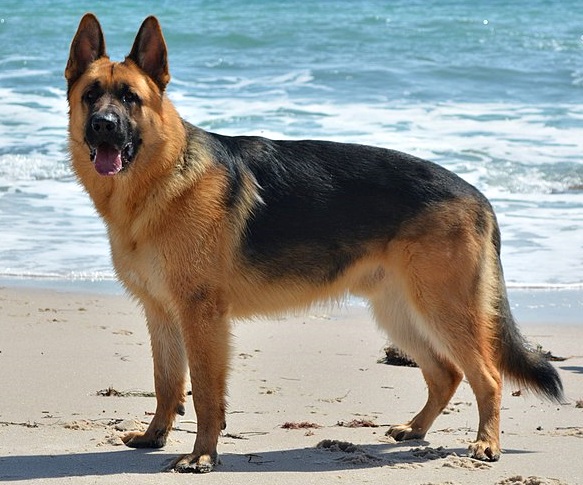
German Shepherd
Loyal · Confident · Intelligent
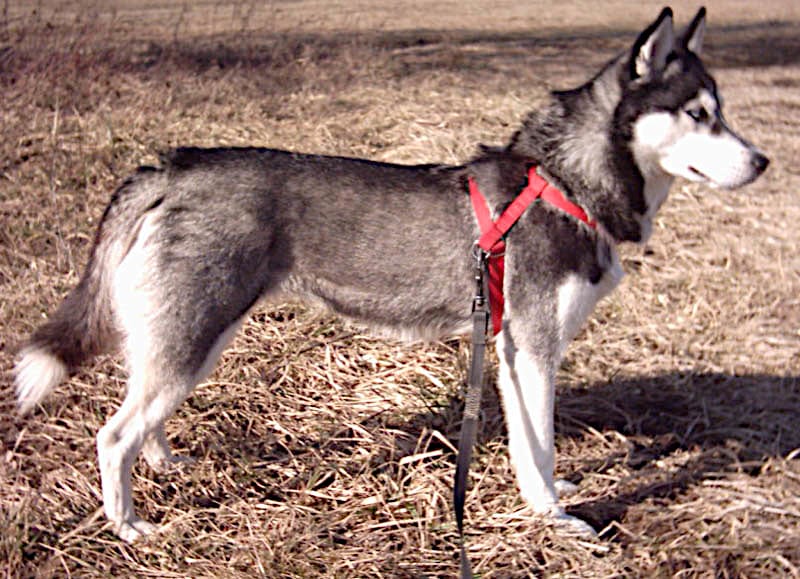
Siberian Husky
Friendly · Independent · Energetic
Sources and review
- Breed reference: American Kennel Club
- Wikidata entry: Q37629
- FCI, Australian Shepherd standard No. 342 (05.06.2009)
- American Kennel Club, Australian Shepherd breed page (height, weight, life expectancy)
- Gazzano V. et al. (2026), Veterinary Sciences, temperament of Australian Shepherds (C-BARQ)
- Gramer I. et al. (2011), The Veterinary Journal, MDR1 mutation frequency in herding breeds in Germany
- Majchrakova Z. et al. (2023), PLoS One, hereditary disease variants in European Australian Shepherds
- Mellersh C.S. et al. (2009), Veterinary Ophthalmology, HSF4 mutation and cataract in Australian Shepherds
- Varga L. et al. (2020), Genes, merle and double merle in dogs (review)
- Strain G.M. et al. (2009), Journal of Veterinary Internal Medicine, deafness in merle dogs
- Weissl J. et al. (2012), Journal of Veterinary Internal Medicine, idiopathic epilepsy in Australian Shepherds
- McMillan K.M. et al. (2024), Scientific Reports, longevity of companion dog breeds in the UK
- Société Centrale Canine, Livre des origines français (LOF)
- In-depth content updated: November 18, 2026
- Last reviewed: October 7, 2026