Dog · Germany
German Shepherd
German Shepherds are large herding dogs standardised in Germany at the end of the 19th century. They are intelligent, loyal and highly trainable, which is why they are common working, police and assistance dogs.
- Loyal
- Confident
- Intelligent
Last reviewed: October 7, 2026
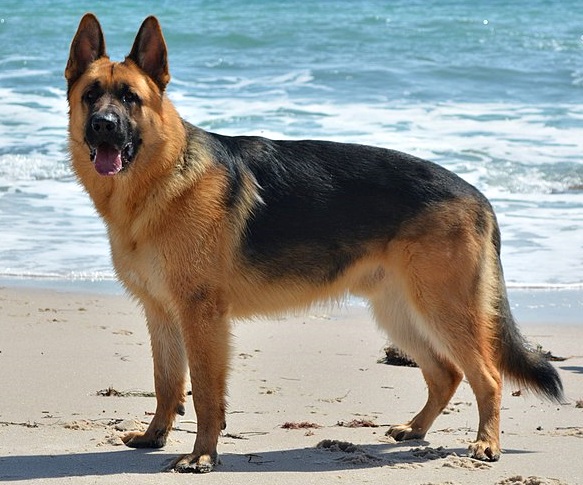
Key facts
| Origin | Germany |
|---|---|
| Size | Large |
| Adult weight | 22–40 kg |
| Life expectancy | 12–14 years |
| Height at withers (FCI) | Male 60–65 cm, female 55–60 cm |
| Weight (FCI) | Male 30–40 kg, female 22–32 kg |
| Median lifespan (UK studies) | 10.3 to 11.3 years (see Health) |
Typical ranges; individuals vary.
Care and needs
Needs daily physical exercise plus training or work. Heavy seasonal shedding.
Good to know
Early socialisation is important. Not a good match for owners with little time.
This is general information. For your own animal’s health, ask a vet.
At a glance
- Energy
- Exercise needs
- Grooming
- Shedding
- Family-friendly
- With other pets
- Apartment-friendly
- Trainability
- Copes with time alone
- Vocal
PawShorts editorial estimates (1–5), not measurements. Use them to compare breeds with each other.
What is a German Shepherd’s temperament like?
The FCI standard (No. 166) describes a versatile working, herding and service dog. It must be well balanced, with strong nerves, self-assured, natural and, except in a stimulated situation, good-natured, attentive and willing to please. The standard disqualifies dogs of weak character and weak nerves that bite.
In a Finnish survey of 13,700 dogs, including 461 German Shepherds, hyperactivity and impulsivity were most common in mixed breeds, German Shepherds, Spanish Water Dogs and Staffordshire Bull Terriers, and compulsive behaviour was most often reported by German Shepherd owners (Salonen et al., 2020). In the UK, aggression was recorded in the vet notes of 4.8% of German Shepherds over one year, more often in males (6.8%) than females (2.8%) (O’Neill et al., 2017).
These figures describe population trends, not your future dog: lines, socialisation and training matter a lot.
Size, weight and coat
The standard sets a height at the withers of 60 to 65 cm and a weight of 30 to 40 kg for males, and 55 to 60 cm and 22 to 32 kg for females. The American Kennel Club gives similar values: 65 to 90 lb (30 to 41 kg) for males and 50 to 70 lb (23 to 32 kg) for females.
Dogs that are actually weighed are often heavier. In a UK study of 12,146 German Shepherds under veterinary care, median adult weight was 40.1 kg for males and 34.8 kg for females, and 53% of males weighed 40 kg or more (O’Neill et al., 2017). Your vet can help you assess your dog’s ideal weight.
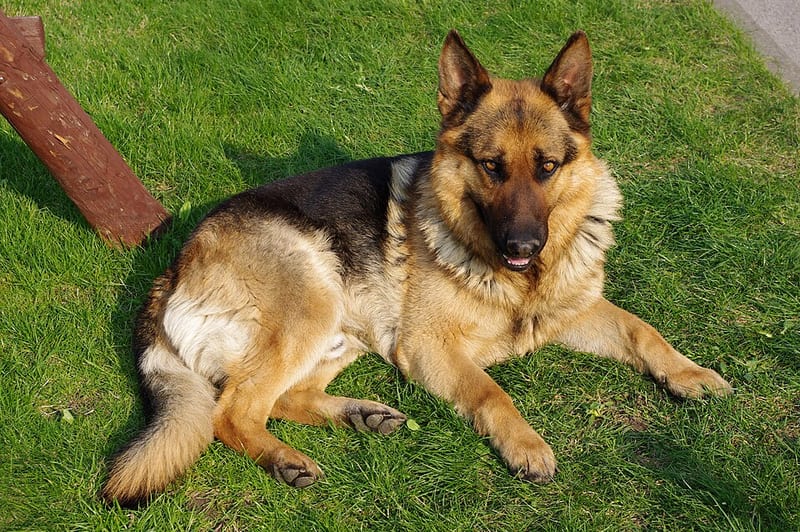
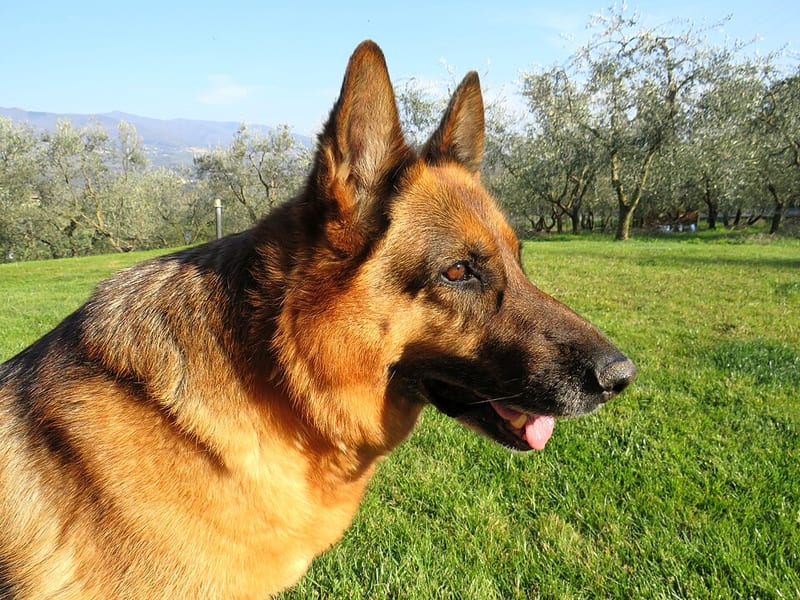
The standard allows two varieties: double coat and long double coat, both with undercoat. Allowed colours are black with reddish-brown, brown or yellow to light grey markings, solid black, and grey with darker shading. White is not allowed.
Health: what the studies show
Most common problems. In a sample of 1,660 German Shepherds under veterinary care in the UK, the disorders most often recorded over one year were otitis externa (7.9%), osteoarthritis (5.5%), diarrhoea (5.2%) and overweight (5.2%). Hip dysplasia affected 2.6% of dogs and anal furunculosis 1.4% (O’Neill et al., 2017).
Hips and elbows. In Sweden, of more than 12,000 German Shepherds X-rayed between 2007 and 2016, 25.6% had a hip grade of C to E (mild to severe dysplasia) and 16.9% an elbow grade of 1 to 3 (Engdahl et al., 2026). Poor hip and elbow grades often went together.
Degenerative myelopathy. This spinal cord disease causes progressive hind-limb paralysis in older dogs. Of 6,458 German Shepherds tested, about 22% carried two copies of the at-risk SOD1 variant (Zeng et al., 2014). Two copies raise the risk but do not mean the dog will necessarily develop the disease.
Causes of death. Musculoskeletal disorders (16.3%), inability to stand (14.9%), cancer (14.5%) and spinal cord disease (13.6%) were the most common causes of death (O’Neill et al., 2017).
Life expectancy. UK studies give a median lifespan of 10.3 years (O’Neill et al., 2017) to 11.3 years (McMillan et al., 2024), and a life expectancy at birth of 10.2 years (Teng et al., 2022). The American Kennel Club gives 12 to 14 years, a higher range than these studies observe.
Drawbacks to know before you commit
The German Shepherd is a large working dog, with real constraints:
- High needs for activity and training, with hyperactivity and compulsive behaviour reported in the breed.
- A risk of hip and elbow dysplasia, and osteoarthritis with age.
- A median lifespan of about 10 to 11 years in the UK, shorter than many breeds.
- A double coat that needs regular brushing.
Before buying or adopting a German Shepherd
In France, only a dog registered in the LOF can be sold as a pedigree dog (Rural Code, article L214-8). We do not give prices, for lack of a reliable, current source. Here is what to ask:
- The parents’ official hip and elbow dysplasia screening results.
- The parents’ SOD1 DNA test result (degenerative myelopathy).
- The parents’ temperament: a stable, self-assured dog, neither fearful nor aggressive.
- The pedigree, the vet certificate and the puppy’s identification. Consider shelters and breed rescues too.
This is general information. For your own animal’s health, ask a vet.
German Shepherd photos
Videos featuring a German Shepherd

Next steps
Frequently asked questions
Is a German Shepherd good for an apartment?
It is not ideal: apartment fit is very low and exercise needs are very high. A home with outdoor space and lots of outings suits it better.
Can a German Shepherd be left alone?
This needs planning: we rate its tolerance of time alone as low. Arrange walkers, sitters or company if you are out for long periods.
How much does an adult German Shepherd weigh?
The FCI standard gives 30 to 40 kg for males and 22 to 32 kg for females. In the UK, measured median adult weight was 40.1 kg for males and 34.8 kg for females (O’Neill et al., 2017).
How long do German Shepherds live?
UK studies give a median lifespan of 10.3 to 11.3 years. The American Kennel Club gives 12 to 14 years.
Is a white German Shepherd allowed by the standard?
No. The FCI German Shepherd standard does not allow white. The White Swiss Shepherd is a separate breed.
Are German Shepherds prone to hip dysplasia?
Yes, it is worth watching: in Sweden, 25.6% of German Shepherds X-rayed had mild to severe hip dysplasia (Engdahl et al., 2026). Ask for the parents’ screening results.
Similar breeds
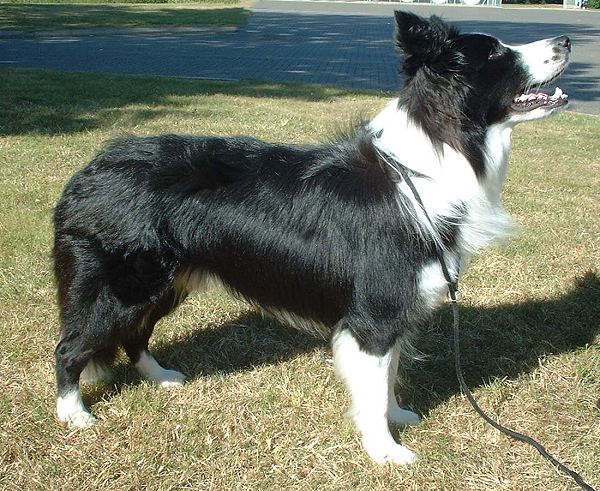
Border Collie
Intense · Smart · Energetic
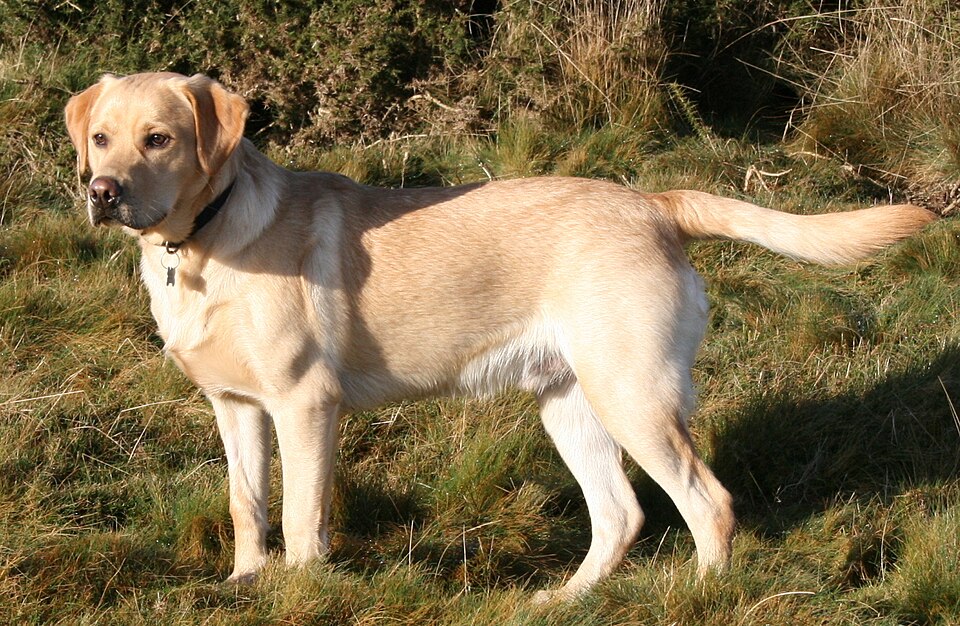
Labrador Retriever
Outgoing · Even-tempered · Active
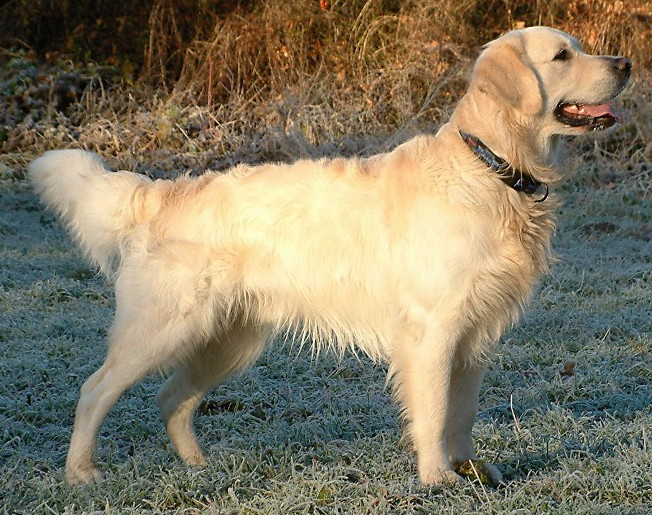
Golden Retriever
Friendly · Eager to please · Playful
Sources and review
- Breed reference: American Kennel Club
- Wikidata entry: Q38280
- FCI, German Shepherd Dog standard No. 166 (23.12.2010)
- American Kennel Club, German Shepherd Dog breed page (height, weight, life expectancy)
- O’Neill D.G. et al. (2017), Canine Genetics and Epidemiology, demography and disorders of German Shepherd Dogs in the UK
- Salonen M. et al. (2020), Scientific Reports, prevalence and breed differences of canine anxieties
- Engdahl K. et al. (2026), Veterinary Record, hip and elbow dysplasia screening in Swedish dogs
- Zeng R. et al. (2014), Journal of Veterinary Internal Medicine, SOD1 variant and degenerative myelopathy across breeds
- Teng K.T. et al. (2022), Scientific Reports, life tables for companion dogs in the UK
- McMillan K.M. et al. (2024), Scientific Reports, longevity of companion dog breeds in the UK
- Société Centrale Canine, Livre des origines français (LOF)
- In-depth content updated: November 18, 2026
- Last reviewed: October 7, 2026