Dog · Siberia (Russia), developed in the United States
Siberian Husky
Siberian Huskies are medium-sized sled dogs descended from dogs of the Chukchi people of Siberia. They are friendly, independent and built to run long distances in the cold.
- Friendly
- Independent
- Energetic
Last reviewed: October 7, 2026
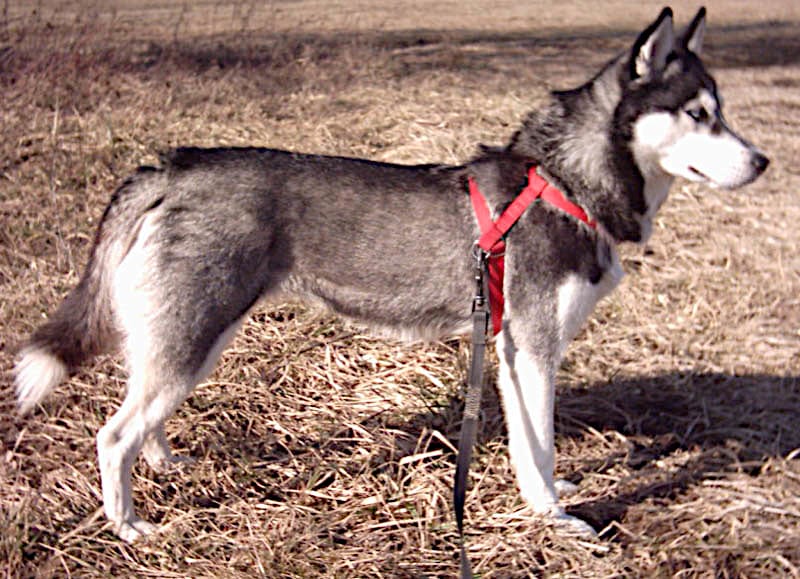
Key facts
| Origin | Siberia (Russia), developed in the United States |
|---|---|
| Size | Medium |
| Adult weight | 15.5–28 kg |
| Height at withers (FCI) | Male 53.5–60 cm, female 50.5–56 cm |
| Weight (FCI) | Male 20.5–28 kg, female 15.5–23 kg |
| Median survival (UK study) | 11.9 years (see Health) |
Typical ranges; individuals vary.
Care and needs
Needs a lot of running exercise and a securely fenced garden. Heavy seasonal moults. Avoid exercise in hot weather.
Good to know
Strong urge to run and often weak recall: many escape or chase small animals.
This is general information. For your own animal’s health, ask a vet.
At a glance
- Energy
- Exercise needs
- Grooming
- Shedding
- Family-friendly
- With other pets
- Apartment-friendly
- Trainability
- Copes with time alone
- Vocal
PawShorts editorial estimates (1–5), not measurements. Use them to compare breeds with each other.
What is a Siberian Husky’s temperament like?
The FCI standard (No. 270) describes it as friendly and gentle, but also alert and outgoing. It does not display the possessive qualities of a guard dog, is not overly suspicious of strangers and is not aggressive with other dogs. Some reserve is acceptable in the mature dog. Its intelligence, tractability and eager disposition make it, according to the standard, an agreeable companion and willing worker.
It is a Nordic sledge dog (Group 5), bred to carry a light load at moderate speed over great distances. We found no behaviour study specific to the breed.
Size, weight, coat and eyes
The standard sets a height at the withers of 53.5 to 60 cm for males and 50.5 to 56 cm for females, and a weight of 20.5 to 28 kg for males and 15.5 to 23 kg for females, in proportion to height. These are extreme limits with no preference for either end. Males over 60 cm and females over 56 cm are disqualified. In the UK, median adult weight of dogs recorded as “Husky” was 27.8 kg for males and 24.3 kg for females (O’Neill et al., 2023).
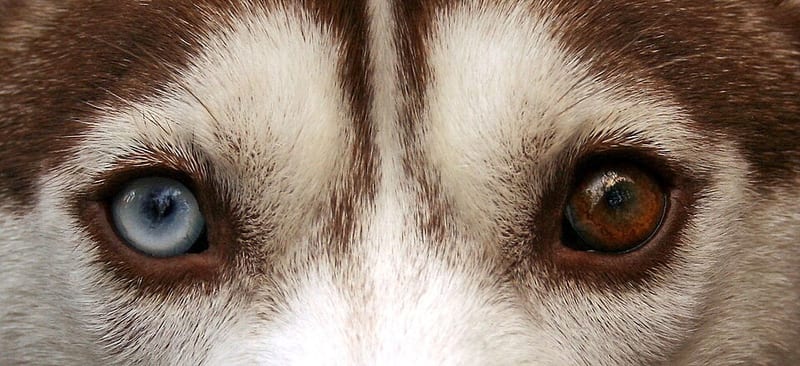
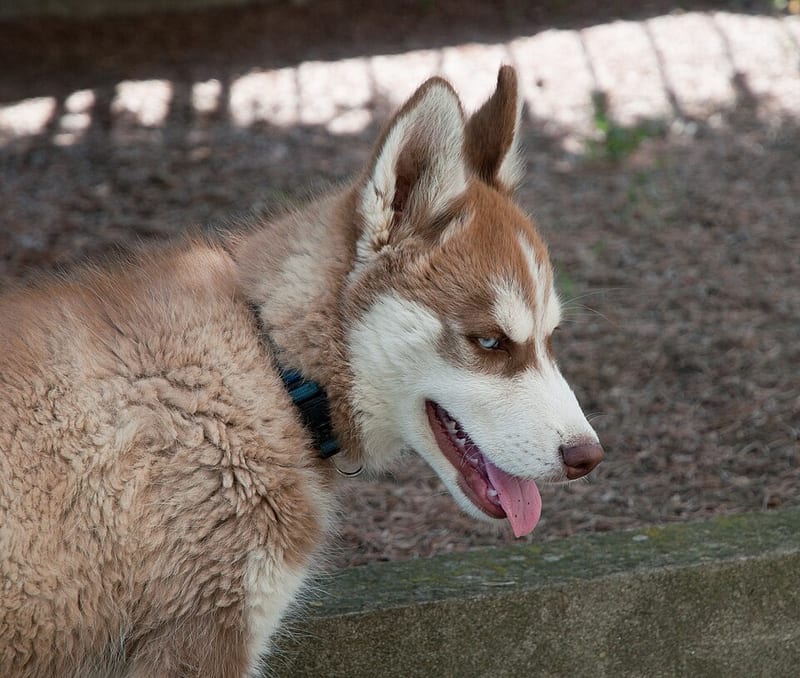
The coat is double and medium in length, with a soft, dense undercoat that may be absent during shedding. All colours from black to white are allowed, except merle and brindle. The eyes may be brown or blue, one of each, or particoloured.
Health: what the studies show
Blue eyes. They are strongly associated with a DNA duplication near the ALX4 gene, largely restricted to Siberian Huskies (Deane-Coe et al., 2018). Odd eyes are also more common in Huskies (Beckwith-Cohen & Petersen-Jones, 2024).
Eye diseases. An X-linked progressive retinal atrophy (XLPRA1), caused by the RPGR gene, has been described in the Husky and the Samoyed (Zangerl et al., 2007). Cataracts are common in Northern breeds such as the Husky, and CPT1A gene variants are strongly associated with a bilateral form of cataract (Ricketts et al., 2025). The Husky is also overrepresented in uveodermatologic syndrome, an autoimmune disease affecting the eyes and skin (Beckwith-Cohen & Petersen-Jones, 2024).
Skin. In a series of 41 cases of zinc-responsive dermatosis, the Siberian Husky was the most affected breed, mainly with crusts around the eyes (White et al., 2001).
Eyelids. Conversely, the Husky is among the breeds least at risk of eyelid defects such as entropion (O’Neill et al., 2025).
Life expectancy. In the UK, median survival of the Siberian Husky was 11.9 years from 1,947 deaths, just below crossbred dogs (12.0 years) (McMillan et al., 2024). Another study, of only 154 dogs, gives a life expectancy at birth of 9.5 years (Teng et al., 2022).
Drawbacks to know before you commit
The Husky is built to run for a long time, which has everyday consequences:
- A strong need for endurance exercise every day.
- It is not a guard dog: the standard describes it as not overly suspicious of strangers.
- Heavy shedding of the undercoat.
- Eye diseases described in the breed, worth monitoring.
Before buying or adopting a Siberian Husky
In France, only a dog registered in the LOF can be sold as a pedigree dog (Rural Code, article L214-8). We do not give prices, for lack of a reliable, current source. Here is what to ask:
- A recent eye examination of both parents by a veterinary ophthalmologist.
- The XLPRA1 DNA test result if the line is concerned.
- The pedigree, the vet certificate and the puppy’s identification. Consider shelters and breed rescues too.
This is general information. For your own animal’s health, ask a vet.
Siberian Husky photos
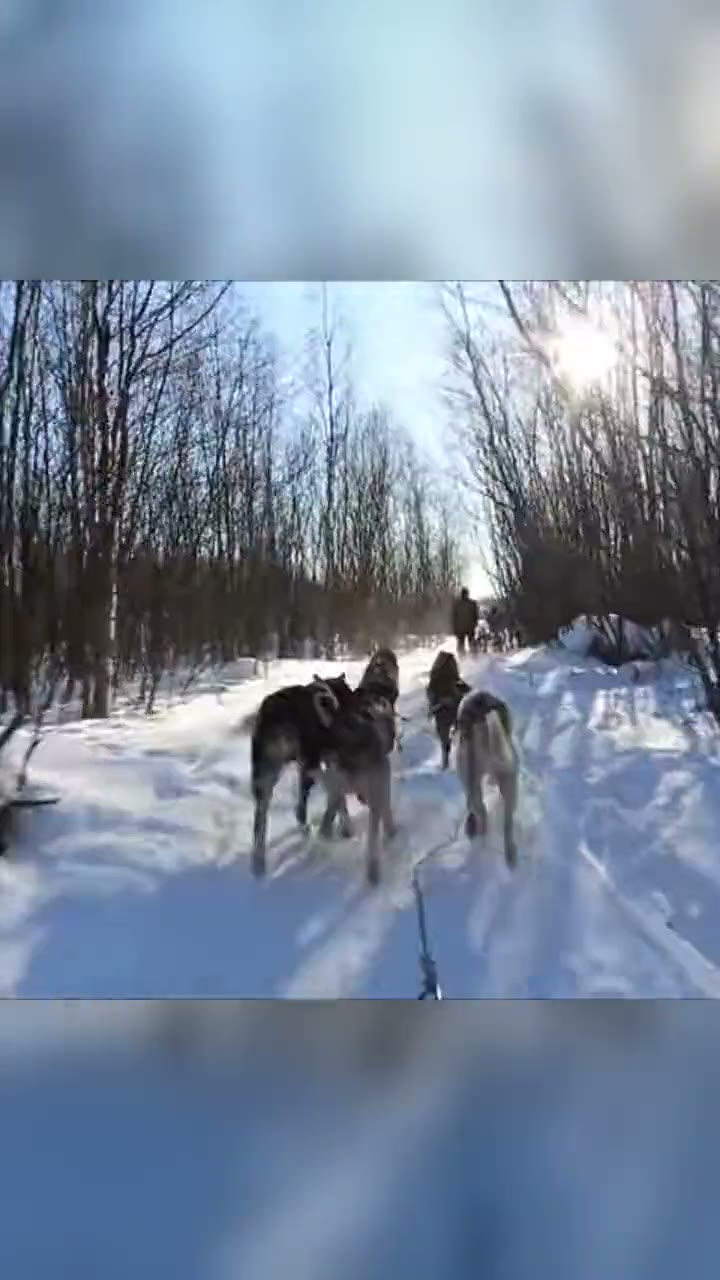
Videos featuring a Siberian Husky
Next steps
Frequently asked questions
Is a Siberian Husky good for an apartment?
It is not ideal: apartment fit is very low and exercise needs are very high. A home with outdoor space and lots of outings suits it better.
Can a Siberian Husky be left alone?
This needs planning: we rate its tolerance of time alone as low. Arrange walkers, sitters or company if you are out for long periods.
How much does a Siberian Husky weigh?
According to the FCI standard, 20.5 to 28 kg for males and 15.5 to 23 kg for females, in proportion to height.
Why do Huskies have blue eyes?
Blue eyes are strongly associated with a DNA duplication near the ALX4 gene, largely restricted to the breed (Deane-Coe et al., 2018). The standard accepts brown, blue, odd or particoloured eyes.
How long do Huskies live?
In the UK, median survival was 11.9 years (McMillan et al., 2024). A smaller study gives a life expectancy at birth of 9.5 years (Teng et al., 2022).
Is a Husky a good guard dog?
No. The FCI standard states that it does not display the possessive qualities of a guard dog and is not overly suspicious of strangers.
Similar breeds
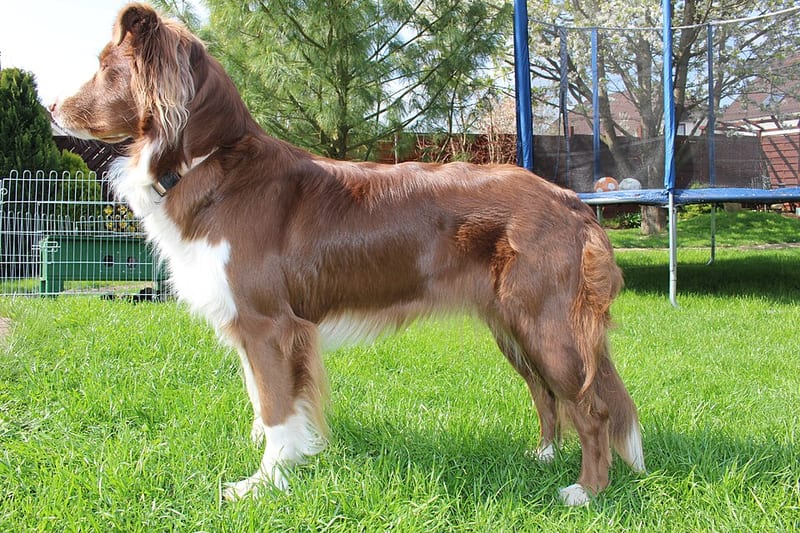
Australian Shepherd
Smart · Energetic · Devoted
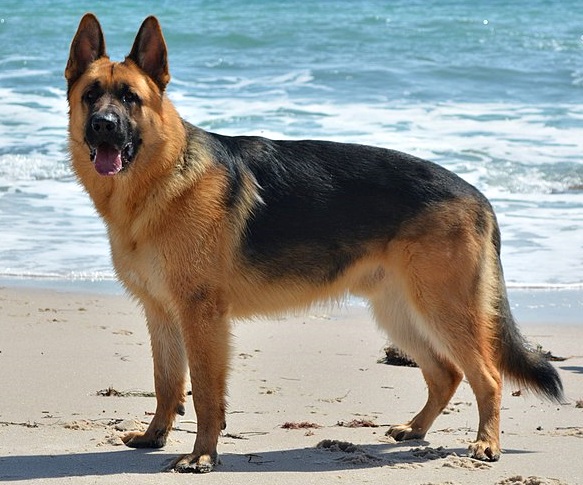
German Shepherd
Loyal · Confident · Intelligent
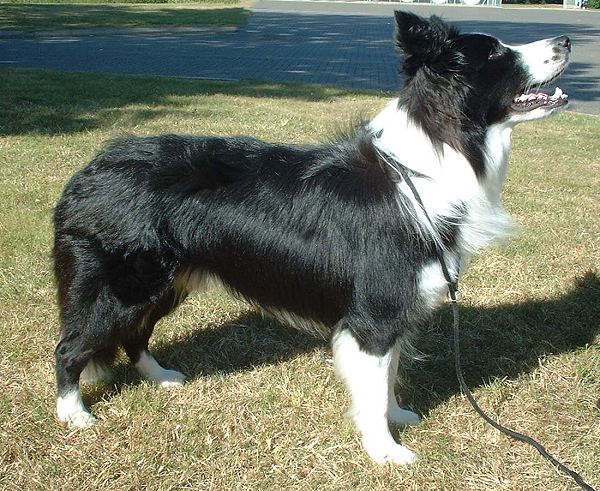
Border Collie
Intense · Smart · Energetic
Sources and review
- Breed reference: FCI, Siberian Husky standard No. 270
- Wikidata entry: Q39295
- FCI, Siberian Husky standard No. 270 (18.11.2022)
- O’Neill D.G. et al. (2023), PLoS One, demography of dogs under primary veterinary care in the UK in 2019
- Deane-Coe P.E. et al. (2018), PLoS Genetics, ALX4 duplication and blue eyes in Siberian Huskies
- Zangerl B. et al. (2007), Journal of Heredity, RPGR mutations and X-linked progressive retinal atrophy
- Ricketts S.L. et al. (2025), PLoS One, CPT1A variants and cataract in Siberian Huskies
- Beckwith-Cohen B., Petersen-Jones S.M. (2024), Frontiers in Veterinary Science, review of canine uveitis and pigmentation
- White S.D. et al. (2001), Veterinary Dermatology, zinc-responsive dermatosis in dogs
- O’Neill D.G. et al. (2025), PLoS One, conformational eyelid disorders in UK dogs
- McMillan K.M. et al. (2024), Scientific Reports, longevity of companion dog breeds in the UK
- Teng K.T. et al. (2022), Scientific Reports, life tables for companion dogs in the UK
- Société Centrale Canine, Livre des origines français (LOF)
- In-depth content updated: November 18, 2026
- Last reviewed: October 7, 2026